
• StrictlyVC: May 24, 2016

    It is Tuesday! (It’s kind of a relief after one verrrry long Monday.) Hope yours is going very well.:)

    ——

    Top News in the A.M.

    Coming soon to Twitter: express even more in 140 characters.

    —–

    L.A. Gets a Later-Stage Player with March Capital Partners

    L.A. has a new later-stage funding source in March Capital Partners, a firm with a newly closed $240 million fund — and a few tricks up its sleeve. For starters, though it invests in both Southern and Northern California, it considers itself a global investor and has already made bets in India (in online payments company BillDesk) and Germany (Dojo Madness, which makes a digital coaching app for gamers).

    It also writes Series B and Series C checks, which can’t be said of many other L.A.-based venture firms. And March Capital, which is primarily focused on business-to-business enterprises, has ties to three other enterprises that help with its deal flow. It’s a cofounder and an investor in two Bay Area accelerators that keep it abreast of new trends: The Fabric and Hive. More, one of its founding partners is Jamie Montgomery, a renowned investment banker who in recent years has launched an annual summit that introduces privately held companies to hundreds of investors and this year featured former Cisco CEO John Chambers, Atom Factory’s CEO Troy Carter, and designer Yves Béhar among others.

    Montgomery isn’t the only familiar face at March, either. Others of March’s founding partners include longtime VCs Jim Armstrong, Sumant Mandal — both formerly of Clearstone Venture Partners — and Gregory Milken, a serial entrepreneur and board member of the Milken Institute.

    We talked yesterday with Montgomery and Mandal about their new firm, which they quietly formed 20 months ago. (They spent the last 18 months fundraising.)

    Sumant, you and Jim spent much of your careers at Clearstone. Is it shutting down?

    More here.

    ——

    New Fundings

    Agari, a seven-year-old, San Mateo, Ca.-based company that makes data-driven security software to eliminate email as a channel for cyberattacks, has raised $22 million in Series D funding led by Norwest Venture Partners, with participation from earlier backers Greylock Partners, Alloy VenturesBattery Ventures, First Round Capital, Scale Venture Partners and angel investor Scott Banister. Fortune has more here.

    Apixio, a seven-year-old, San Mateo, Ca.-based data science company focused on healthcare, has raised $19.3 million in Series D funding led by SSM Partners, with participation from First Analysis, Bain Capital Ventures and Apixio’s largest angel investor, Farzad Nazem. More here.

    AutoGrid Systems, a five-year-old, Redwood City, Ca.-based company whose applications help utilities, electricity retailers, renewable energy project developers and energy service providers manage their distributed energy resources, has raised $20 million in new funding co-led by by Energy Impact Partners and Envision Ventures. Other participants in theround include Envision Energy, and previous backer E.ON, one of the largest utilities and renewable energy developers in the world. More here.

    BigID, a seven-month-old, New York-based early-stage security company focused on helping organizations protect the privacy of their customer data, has raised $2.1 million in seed funding from Genacast Ventures, BOLDstart Ventures, and Deep Fork Capital. TechCrunch has more here.

    Bloomz, a two-year-old, Redmond, Wa.-based education tech startup whose app securely connects teachers and parents, has raised $2.3 million in seed funding from 8VC, ff Venture Capital, Founder’s Co-op, CorrelationVCWisemont Capital, Acequia Capital and individual angels. TechCrunch hasmore here.

    Gett, a six-year-old, New York-based cab-hailing startup with operations across some 60 cities, is getting a $300 million investment from the German car giant Volkswagen. The round brings its total funding to $520 million. TechCrunch has more here.

    Menu Next Door, a year-old, Brussels-based Airbnb-like platform that invites users to either cook for people nearby or to pick up food from a local home cook who’s featured on the platform, has raised $2 million (€1.75 million) from Index Ventures, Local Globe, Kima Ventures and TheFamily. TechCrunch has more here.

    Nucleix, a nine-year-old, Tel Aviv, Israel-based developer of urine tests for the monitoring of bladder cancer, has raised $3 million in new funding led by Aurum Ventures. More here.

    nuTonomy, a three-year-old, Cambridge, Ma.-based developer of software for self-driving cars, has raised $16 million Series A funding led by Highland Capital, with participation from Samsung Ventures, EDBI (the corporate investment arm of the Singapore Economic Development Board) and earlier investors Fontinalis Partners and Signal Ventures. The WSJ has more here.

    Pattern, a year-old, Redwood City, Ca.-based online “workspace” platform designed to make life easier for salespeople, has raised $2.5 million in seed funding from First Round Capital, SoftTech VC, and Felicis Ventures. We wrote about the company here.

    Sensifree, a four-year-old, Cupertino, Ca.-based company that makes contactless sensors for wearables, has raised $5 million in Series A funding led by TransLink Capital, with participation from UMC Capital and an undisclosed strategic investor. More here.

    SigFig, a five-year-old, San Francisco-based developer of tech-enabled financial advisory services products like reports, has raised $40 million from the venture investment arms of a slew of big banks in the form of $33 million in equity and $7 million in debt. Participants in the round include Santander Innoventures,UBS, Eaton Vance and New York Life. Previous investors Union Square Ventures, Bain Capital Ventures, DCM, and NYCA Partners also joined the round, as did Comerica Bank, which provided SigFig with $7 million in debt. TechCrunch has more here.

    Snapchat, the five-year-old, Venice, Ca.-based mobile app that began as an ephemeral messaging service, is raising new funding at a $20 billion valuation, says TechCrunch. The capital will follow a $175 million Series F round led by Fidelity earlier this year. More here.

    TourRadar, a six-year-old, Vienna, Austria-based online marketplace for multi-day travel tours, has raised $6 million in funding co-led by Cherry Ventures and Hoxton Ventures, with participation from AWS Founders Fund and Speedinvest. TechCrunch has more here.

    vArmour, a five-year-old, Mountain View, Ca.-based startup that offers security solutions specifically aimed at enterprises that run services and apps across multiple clouds, has raised $41 million in Series D funding led by Telstra, the large multinational carrier based out of Australia. Other investors include Redline Capital and numerous (unnamed) strategic investors. TechCrunch has more here.

    —–

    New Funds

    According to Fortune, Andreessen Horowitz is nearing a close on a new, $1.5 billion fund, one that’s expected to close in a month or less. (We’d reported this was in the works in March.)

    —–

    Exits

    eBay has acquired Ticketbis, a seven-year-old, Bilbao, Spain-based ticket marketpace that will be rolled into eBay’s StubHub platform for $165 million. According to CrunchBase, Ticketbis had raised roughly $26 million in funding, including from Active Venture Partners and investor-entrepreneur Fabrice Grinda. TechCrunch has more here.

    Goldman Sachs has acquired Honest Dollar, a 1.5-year-old, Austin, Tex.-based online retirement savings platform company. Financial terms weren’t disclosed. According to CrunchBase, Honest Dollar had raised $3 million in funding from Expansive Ventures, Formation 8, Core Innovation Capital, and Mint founder Aaron Patzer.

    —–

    People

    Harvard Management Co. has a new, temporary leader while Stephen Blyth is on medical leave, and it’s Robert Ettl, a Pimco alum. Bloomberg has more here.

    According to Fortune, Marc Michel is quietly moving on from Metamorphic Ventures, the New York-based venture firm firm he co-founded in 2006. His plan is to launch a new firm focused on providing seed extension rounds called Runway Venture Partners.

    Alphabet’s Eric Schmidt admits he’s an iPhone user, but he insists Samsung is better.

    —–

    Jobs

    Kleiner Perkins Caufield & Byers is looking to hire a financial analyst. The job is in Menlo Park, Ca.

    —–

    Essential Reads

    Startup employees are beginning to invoke an obscure law to compel companies that are incorporated in Delaware to open up their books to shareholders. It comes from section 220 of Delaware’s corporate law, and to take advantage of it, stockholders must prove that they own at least one share, then send the company an affidavit that states which documents they want and why, along with the magic words, “For the purpose of valuing my shares.” The WSJ has the story.

    Facebook says an internal investigation found no evidence of systemic political bias in a section of its app called Trending Topics. Even so, the company is making some changes to Trending Topics, including no longer referring to a list of national news sources, including Fox News and The New York Times, to “boost” topics that appear. The New York Times has more here.

    Facebook Live may soon let you skip to the good part (which could have a huge impact on how we view onine video).

    How technology hijacks people’s minds (straight from a former design ethics and product philosopher at Google).

    —–

    Detours

    Delicate underwater portraits.

    The worst things artificial intelligence could do, as imagined by top researchers.

    “They were nice guys, they were d_cks.” Going behind the scenes with the ’90s band The Replacements.

    An updated look at the U.S. airlines that the most (and the least) likely to lose your luggage.

    —–

    Retail Therapy

    Ha. Pop Tart phone case.
  • L.A. Gets a Later-Stage Player with March Capital Partners

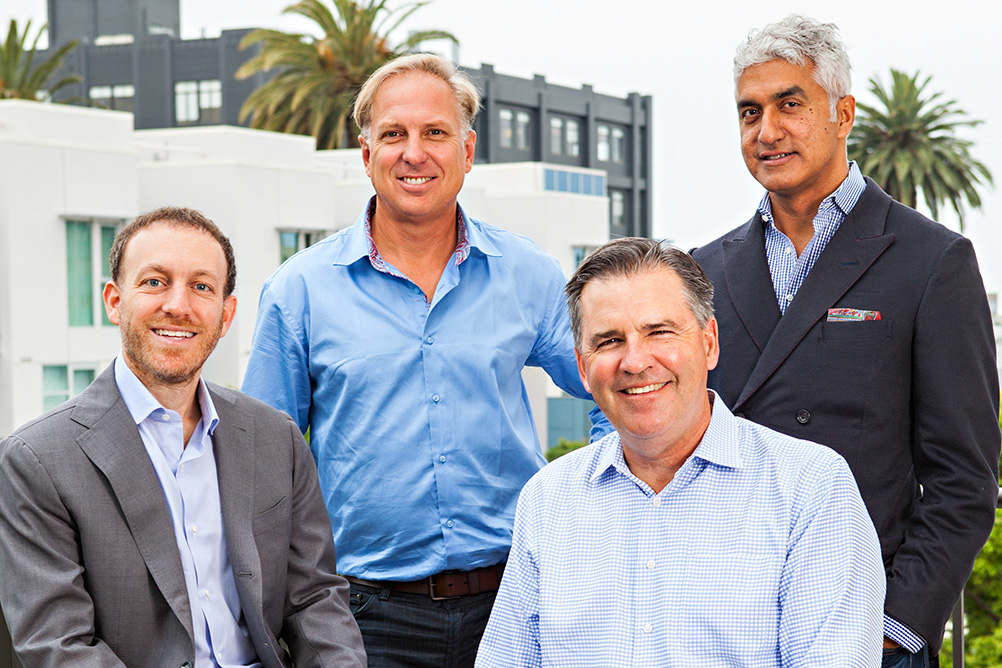
    IMG_1326_Group HorizontalL.A. has a new later-stage funding source in March Capital Partners, a firm with a newly closed $240 million fund — and a few tricks up its sleeve. For starters, though it invests in both Southern and Northern California, it considers itself a global investor and has already made bets in India (in online payments company BillDesk) and Germany (Dojo Madness, which makes a digital coaching app for gamers).

    It also writes Series B and Series C checks, which can’t be said of many other L.A.-based venture firms. And March Capital, which is primarily focused on business-to-business enterprises, has ties to three other enterprises that help with its deal flow. It’s a cofounder and an investor in two Bay Area accelerators that keep it abreast of new trends: The Fabric and Hive. More, one of its founding partners is Jamie Montgomery, a renowned investment banker who in recent years has launched an annual summit that introduces privately held companies to hundreds of investors and this year featured former Cisco CEO John Chambers, Atom Factory’s CEO Troy Carter, and designer Yves Béhar among others.

    Montgomery isn’t the only familiar face at March, either. Others of March’s founding partners include longtime VCs Jim Armstrong, Sumant Mandal — both formerly of Clearstone Venture Partners — and Gregory Milken, a serial entrepreneur and board member of the Milken Institute.

    We talked yesterday with Montgomery and Mandal about their new firm, which they quietly formed 20 months ago. (They spent the last 18 months fundraising.)

    Sumant, you and Jim spent much of your careers at Clearstone. Is it shutting down?

    More here.

  • StrictlyVC: May 23, 2016

    Hi, all, welcome back!

    —–

    Top News in the A.M.

    The clearest look yet at the iPhone 7.

    —–

    Checking the Market’s Temperature with Bain’s Ajay Agarwal

    Ajay Agarwal leads the West Coast team for Bain Capital Ventures, which he joined 13 years ago. Because he he has seen some market zigs and zags, we met him for coffee last week to talk about what he’s seeing in the market right now. Our chat has been edited for length.

    Bain Capital Ventures opened its first office in the Bay Area five years ago. Now you have an office in Palo Alto, and you’re moving into a bigger office soon in San Francisco. How many of your partners are here now, and how many of your startups are in SF versus south of the city? 

    It used to be that 90 percent of our team was on the East Coast, in Boston and New York, and 10 percent was here, but it’s about 50/50 at this point. And I’d say 40 percent of our [Bay Area] startups are south. There are a lot of machine learning companies in Sunnyvale and Mountain View and Los Altos, and that’s a big area of interest for us right now.

    What’s one new, related investment that might interest readers?

    Trooly, whose team comes from LinkedIn. If you think about it, we have all these peer-to-peer marketplaces bringing together strangers, whether they are drivers or babysitters. But the state of the art — background checks — is a flawed process. A lot of information has been digitized, but there are still plenty of counties where, if you’ve committed a crime, they’ll have a physical record alone. So you’d have to send a courier to all of the places where someone has lived to get the information you need, which is expensive.

    Meanwhile, Trooly can figure out much more about someone and do it quickly using data science and machine learning. It can figure out any content that has been written by you or about you and whether it’s in any way objectionable. It can verify if the information you send someone is accurate and distinguish between a typo and whether you’re trying to fool someone [on an application]. For every person who fails a background check, we find a person who passed a background check and should not have.

    More here.

    —–

    New Fundings

    CloudMinds, a Beijing and Shenzhen, China-based maker of so-called intelligent cloud robots, has raised $30 million in venture funding fromSoftBank Group, Hon Hai Precision Industry Co., Walden International, and Kaixuan Capital. DealStreetAsia has more here.

    Metadata, a year-old, San Francisco-based ad-targeting startup, has raised $2 million in seed funding led by Hillsven Capital, with participation from Greycroft Partners, 500 Startups, Right Side Capital Partners and various angel investors. TechCrunch has more here.

    Rock Pamper Scissors, a year-old, London-based online marketplace that lets users browse and book appointments with local hairdressers, has raised £1.2 million ($1.7 million) from 500 Startups and the European pre-seed and seed investor Seedcamp, along with various angel investors. TechCrunch has more here.

    Saguna Networks, a 7.5-year-old, Yokneam, Israel-based mobile edge computing platform, has raised $5 million in funding led by CE Ventures, with participation from existing shareholders. More here.

    SeamlessDocs, a five-year-old, New York startup that helps governments move all their forms online, has raised $7 million in Series B funding led by Motorola Solutions. Other participants in the round include the New York State Innovation Fund, 1776 and previous investor Govtech Fund. TechCrunch has more here.

    Sun Basket, a two-year-old, San Francisco-based healthy cooking service, has raised $11.6 million in Series A funding led by Paul Allen’s Vulcan CapitalPivotNorth, Robertson Stephens Partners, Baseline Ventures, The Tyler Florence Group, Rembrandt Ventures, Correlation Ventures, Relevance Capital, Roth Capital, Filter14, and other(!) unnamed venture capital firms and angel investors. More here.

    Take the Interview, a four-old, New York-based online interviewing platform, has raised $5 million in Series B funding led by 3TS Capital Partners, with participation from earlier backers StarVest Partners and Rittenhouse Ventures. More here.

    Weidai, a five-year-old, Hangzhou, China-based peer-to-peer lending platform, has raised $153 million in Series C funding led by Vision Knight Capital. China Money Network has more here.

    —–

    New Funds

    Harmony Partners, a five-year-old, New York and San Francisco-based expansion stage venture firm, has closed a third fund with $105 million. The company has made 32 investments to date, including the molecular diagnostics company Natera, which went public last year, and the device management startup Divide, acquired by Google in 2014. Its current portfolio includes the cloud-software maker Anaplan, the delivery company Postmates, and the streaming media company Spotify. More here.

    Kleiner Perkins Caufield & Byers, the venture capital firm that last year defended itself against an explosive sexual discrimination lawsuit, is raising two funds totaling close to $1.3 billion, according to CNBC sources. More here.

    OrbiMed, the 27-year-old, global investment firm focused on the healthcare sector, has closed its second Israel-focused venture capital fund with approximately $307 million. Orbimed opened its Israel office in 2010. More here.

    Runa Capital, a nearly six-year-old, Moscow and San Francisco-based venture capital firm, has closed its second fund with $135 million. The focuses on Series A and B round investments in both the U.S. and in Europe. The firm now has roughly $270 million under management. More here.

    —–

    Exits

    Facebook has acquired Two Big Ears, a three-year-old, Scottland-based spatial audio technology company, for an undisclosed sum. VentureBeat has more here.

    TinyOwl, a India-based restaurant delivery service that has raised more than $27 million from investors including Sequoia Capital and Matrix Partners, has reportedly stopped service in all cities except for Mumbai. TechCrunch has more here. (We’d written here about some craziness at the company late last year.)

    —–

    People

    Investor Chris Sacca reportedly had a temper tantrum after he was denied entry into the Broadway musical “Hamilton” as part of his planned birthday celebration. (He’d apparently purchased counterfeit tickets on StubHub.)

    Here’s the commencement address Peter Thiel just gave to graduating seniors at Hamilton College.

    Four houses surrounding Facebook CEO Mark Zuckerberg‘s home in Palo Alto will be demolished and replaced by smaller ones, according to an application filed with city planners last week. Zuckerberg bought the homes after he learned of a developer’s plan to build a house next door tall enough to have a view into his master bedroom. The San Jose Mercury News has the story here.

    —–

    Data

    Deloitte has published a new report on the state of the M&A market. You can check it out here.

    —–

    Essential Reads

    Chinese’s Tencent Holdings, owner of the popular messaging service WeChat, is in talks with SoftBank Group to buy its majority stake in Supercell Oy, the Finland-based maker of some of the world’s most popular mobile games. The WSJ has more here.

    Uh oh. Xiaomi, the Chinese smartphone maker and second highest-valued startup in the world at $45 billion, barely grew sales at all last year. Fortune has more here.

    Brad Feld’s Foundry Group is now also a registered investment advisory. More about why is coming, says Feld.

    —–

    Detours

    A controversial theory that may explain the real reason we have allergies.

    Sounds like there’s nothing magical about breakfast after all.

    An “artist” who turned his dead cat into drone is now building a helicopter out of a cow.

    —–

    Retail Therapy

    How to own a piece of “Mad Men.”

  • Checking the Market’s Temperature with Bain’s Ajay Agarwal

    Screen Shot 2016-05-28 at 8.38.43 AMAjay Agarwal leads the West Coast team for Bain Capital Ventures, which he joined 13 years ago. Because he he has seen some market zigs and zags, we met him for coffee last week to talk about what he’s seeing in the market right now. Our chat has been edited for length.

    Bain Capital Ventures opened its first office in the Bay Area five years ago. Now you have an office in Palo Alto, and you’re moving into a bigger office soon in San Francisco. How many of your partners are here now, and how many of your startups are in SF versus south of the city? 

    It used to be that 90 percent of our team was on the East Coast, in Boston and New York, and 10 percent was here, but it’s about 50/50 at this point. And I’d say 40 percent of our [Bay Area] startups are south. There are a lot of machine learning companies in Sunnyvale and Mountain View and Los Altos, and that’s a big area of interest for us right now.

    What’s one new, related investment that might interest readers?

    Trooly, whose team comes from LinkedIn. If you think about it, we have all these peer-to-peer marketplaces bringing together strangers, whether they are drivers or babysitters. But the state of the art — background checks — is a flawed process. A lot of information has been digitized, but there are still plenty of counties where, if you’ve committed a crime, they’ll have a physical record alone. So you’d have to send a courier to all of the places where someone has lived to get the information you need, which is expensive.

    Meanwhile, Trooly can figure out much more about someone and do it quickly using data science and machine learning. It can figure out any content that has been written by you or about you and whether it’s in any way objectionable. It can verify if the information you send someone is accurate and distinguish between a typo and whether you’re trying to fool someone [on an application]. For every person who fails a background check, we find a person who passed a background check and should not have.

    More here.

  • StrictlyVC: May 20, 2016

    Friday, we meet again! Hope you have a wonderful weekend, everyone! See you soon.

    —–

    Top News in the A.M.

    Tesla just raised $1.46 billion in fresh capital, money it will use toward the high volume production of its Model 3.

    Bids for Yahoo‘s core business are expected to come in at between $2 billion and $3 billion, says the WSJ.

    —–

    New Fundings

    ConceptDrop, a three-year-old, Chicago, Il.-based startup that connects enterprises with freelancers for design and marketing projects, has raised $1.1 million in seed funding led by Network Ventures, a new Chicago-based seed stage firm created by former Pritzker Group venture capitalist Jeff Maters, with participation from 500 Startups, M25 Group, G2T3V, Fulcrum Investing, and angel investors. Crain’s Chicago Business has more here.

    Convene, a seven-year-old, New York-based workplace hospitality platform, has raised $20 million in fresh Series B funding, adding to an earlier close of $15.5 million. The round brings the Series B to more thn $35 million altogether and the company’s total funding to $51.2 million. The newest capital comes from Brookfield Property Group and Arrowpoint Partners. Other investors in the round include Conversion Capital, Boathouse Capital, and Sunrise Capital Partners.

    Kateeva, an eight-year-old, Menlo Park, Ca.-based company that makes production equipment for OLED displays, has raised $88 million in Series E funding from BOE, Cybernaut Venture Capital, Shanghai GP Capital,Redview Capital and TCL Capital. Earlier investors also re-upped, including Samsung Ventures, Sigma Partners, Spark Capital, Madrone Capital Partners, DBL Partners, New Science Ventures and Veeco Instruments.More here.

    Kite Hill, a four-year-old, Hayward, Ca.-based company that makes a line of artisanal nut milk cheeses and yogurts, has raised $18 million in funding led by 301 INC, which is General Mills’s new venture arm, and Cavu Venture Partners, a consumer growth equity firm.

    Springbuk, a seven-year-old, Indianapolis, In.-based employer health analytics platform, has raised $3.75 million in Series A funding led by Lewis & Clark Ventures. More here.

    Staq, a four-year-old, New York-based automated reporting and integrations platform for the digital advertising market, has raised $5 million in funding led by Pereg Ventures, with participation from Core Capital, Genecast, Kinetic Ventures and Revel Partners. Digital NYC has more here.

    Terramera, a six-year-old, Vancouver-based company that produces plant-based alternatives to conventional chemical pesticides and fertilizers, has raised an undisclosed amount of venture funding from Seed 2 Growth VenturesACA Investments, a unit of Sumitomo Corp.; Bold Capital Partners,Renewal Funds and Maumee Ventures. More here.

    —-

    New Funds

    Paul Bragiel, a founder of I/O Ventures (and somewhat famously, a former Olympic hopeful), is looking to raise up to $10 million for a new venture firm that he has cofounded with is brother Dan called Bragiel BrothersMore here.

    —–

    People

    VC Marc Andreessen and entrepreneur Balaji Srinivasan talked to Stanford students on Wednesday about a range of things, including why they should stay in school. More here.

    Jungle Ventures, the Singapore-based venture firm that launched a $100 million fund last year, has recruited three new operating partners to its team. Michael Smith comes from streaming service HOOQ, where he was chief product officer; he joins recent recruits Gabriel Lundberg, ex-Spotify, and Tiang Lim Foo, who led Evernote business development in Asia Pacific. TechCrunch has more here.

    VC Chris Sacca has a bone to pick with a particular U.S. presidential candidate.

    Chinese billionaire Jia Yueting, the CEO of Chinese media giant LeEco, has said he’s a “personal investor” in the new electric car company Faraday Future, but filings show he owned a whopping 94 percent of it as of mid March.

    —–

    Data

    Uber has found people are more likely to pay for surge if their cell phone is almost out of battery — up to 9.9 times more.

    The Pew Research Center published new data yesterday morning shows that 72 percent of Americans have used some type of shared or on-demand service, but just 15 percent have so far used a ride-hailing app. More here.

    —–

    Essential Reads

    Google has created an in-house startup incubator called Area 120 to formalize its approach to letting employees tackle new ideas. Forbes has the story here.

    Bloomberg takes a look at why selling Uber shares may be tougher than you think.

    —–

    Detours

    A 15-year-old’s self-curated museum of Apple products.

    Etch-A-Sketch masterpieces.

    Considering the four-point shot with Larry Bird and Reggie Miller.

    —–

    Retail Therapy

    In search of summer real-estate love.

    TrainerBot ping pong robot. Beep boop beep.

  • StrictlyVC: May 19, 2016

    Hi, happy Thursday, everyone!

    Know this is arriving at an odd hour; we had to rush off to a school production this a.m. before SVC was ready to ship(!).

    —–

    Top News in the A.M.

    Uber is testing its fleet of self-driving Ford Fusion cars on the streets, bridges and hills of Pittsburgh, the ride-sharing company confirmed for the first time yesterday.

    The truth about due diligence

    There’s an expression in venture capital. It’s called the “Oh, shit” board meeting. “That’s when you learn all sorts of things that you wish you’d known after writing a company that first check,” says general partner David Hornik of August Capital.

    It’s easy to imagine that they’ve been happening regularly across the startup industry. The pace of funding in recent years has been feverish, giving investors less time than ever to assess the startups they’re funding. That once-celebrated companies like the blood testing outfit Theranos, and the wireless charging company uBeam, are seemingly fighting for their lives raises plenty of questions, too.

    A recent Vanity Fair piece blamed Silicon Valley media for the rise of certain companies. Meanwhile, a story published earlier this week in Fast Company suggested a culture of spin is at the root of the problem. As one founder told the outlet, “Being honest in Silicon Valley is like being the one member of an Olympic team that isn’t on steroids.”

    Of course, none of us would likely have heard of Theranos or uBeam if not for investors, who’ve given the companies $686 million and $25 million, respectively. Were these backers overly optimistic? Did they get duped? Were they even paying attention? It’s easy to wag our fingers as we wait to see how these narratives unfold, but here’s the truth: due diligence only goes so far. While some may think it a scientific process that insulates venture firms from bad investments, due diligence is a surprisingly imperfect process with plenty of limitations.

    “If you’re looking for a black or white answer in doing diligence, it’ll be a fail,” says Matt Murphy, a former Kleiner Perkins Caufield & Byers partner who joined Menlo Ventures a year ago as a managing director. “You’re usually dealing with shades of gray.”

    More here.

    —–

    New Fundings

    6SensorLabs, a 2.5-year-old, San Francisco-based company that was formerly known as Nima and makes a tiny gluten tester, has raised $9.2 million in Series A funding from investors to create products that also detect peanuts, milk, and other hidden ingredients to which a user could be allergic. Foundry Group led the round, with participation from Upfront Ventures, SoftTech VC, SK Ventures, Lemnos Labs, Mitch Kapor and Nest Labs cofounder Matt Rogers. TechCrunch has more here.

    Afero, a two-year-old, Los Altos, Ca.-based cloud company that secures connected devices — from toys and arcade games to medical equipment — has raised $20.3 million in Series A funding led by Samsung Catalyst Fund, with participation from Presidio Ventures, Sanshin Electronics, SoftBankFenox Venture Capital, Assembly Fund, and Linear Technology co-founder Robert Dobkin. TechCrunch has more here.

    BeMyEye, a five-year-old, London-based mobile crowdsourcing app that companies use to enlist people to carry out mobile tasks, like photographing in-store promotions, has raised €6.5 million ($7.3 million) in Series B funding fromNauta Capital, P101, and previous backer 360 Capital Partners. TechCrunch has more here.

    Decisio Health, a three-year-old, Houston, Tex.-based startup that aims to help acute-care provider organizations improve their clinical processes, has raised $4.5 million in Series A funding led by Declatex, with participation from the University of Texas Horizon Fund. More here.

    Dojo Madness, a two-year-old, Berlin, Germany-based e-sports startup whose mobile app offers tips to gamers to help them improve their gameplay, has raised $4.5 million in Series A funding led by March Capital Partners, with Investment Bank of Berlin and earlier backers London Venture Partners and DN Capital also participating. TechCrunch has more here.

    DriveScale, a three-year-old, Sunnyvale, Ca.-based company at work on flexible, scale-out computing using standard servers and commodity storage, has raised $15 million in Series A funding led by Pelion Venture Partners, with participation from Nautilus Venture Partners and the Foxconn subsidiary Ingrasys. More here.

    Personal Capital, a seven-year-old, San Francisco-based digital wealth management firm founded by former PayPal CEO Bill Harris, has raised $50 million from IGM Financial, a Canadian financial services company that has  agreed to invest another $25 million in the next year. More here.

    Showpad, a five-year-old, Belgium-based company that has built a platform designed to improve other businesses’ sales productivity, has raised $50 million in Series C funding led by Insight Venture Partners, with participation from earlier backers Dawn Capital and Hummingbird Ventures. TechCrunch hasmore here.

    Tally Technologies, a 1.5-year-old, San Francisco-based app that promises to help people maintain good credit scores while avoiding unnecessary fees, has raised $15 million in Series A funding led by Shasta Ventures, with participation from earlier investors Cowboy Ventures and AITV. Silicon Valley Bank also invested. TechCrunch has more here.

    ThoughtSpot, a four-year-old, Palo Alto, Ca.-based company whose business intelligence technology uses a search interface similar to what you might find in a consumer Internet search engine, has raised $50 million in Series C funding led by General Catalyst Partners. The company has now raised just less than $91 million altogether. Fortune has more here.

    Tink, a four-year-old, Stockholm, Sweden-based mobile banking app, has raised $10 million in Series B funding co-led by the Swedish investment firm Creades and SEB Venture Capital, the venture arm of Swedish bank SEB. TechCrunch has more here.

    —–

    New Funds

    B Capital, a new India and Southeast Asia-focused venture fund cofounded by Eduardo Saverin of Facebook fame, has raised $143.6 million for its debut fund, according to SEC filings. In a letter to “friends of B Capital” that were obtained by TechCrunch, Saverin and his cofounder, Raj Ganguly (a prominent investor who worked with Saverin on past deals), the new fund has so far pulled in just 60 percent of its target amount, meaning it’s likely to close with around $250 million. More here.

    e.ventures, a 19-year-old, early-stage venture firm that has offices in Berlin, San Francisco, Beijing, Tokyo, Moscow and São Paulo, has closed a new, $150 million fund to invest in European startups. The company has also brought aboard Bernardo Hernández as its newest general partner. Hernández has founded multiple companies, including the real estate listing site idealista. TechCrunch has more here.

    —–

    People

    Carol Bartz, the former CEO of Autodesk and Yahoo!, has joined the board of the field productivity software company PlanGrid.

    Apple CEO Tim Cook‘s India visit in pictures.

    —–

    Data

    The average age at which children now receive their first smartphone is 10.3 years old.

    —–

    Essential Reads

    A new lawsuit accuses Airbnb of discriminatory housing practices.

    Can a 700 mile-per-hour train in a tube be for real?

    —–

    Detours

    The biggest star on “Game of Thrones” and his surprisingly tiny puppy.

    Why happiness will always will just one more life achievement away.

    —–

    Essential Reads

    Looking to get out of SF? This mansion in Ross might be right up your alley. Note: you will need around $9 million.)

  • The Truth About Due Diligence

    Board-agendaThere’s an expression in venture capital. It’s called the “Oh, shit” board meeting. “That’s when you learn all sorts of things that you wish you’d known after writing a company that first check,” says general partner David Hornik of August Capital.

    It’s easy to imagine that they’ve been happening regularly across the startup industry. The pace of funding in recent years has been feverish, giving investors less time than ever to assess the startups they’re funding. That once-celebrated companies like the blood testing outfit Theranos, and the wireless charging company uBeam, are seemingly fighting for their lives raises plenty of questions, too.

    A recent Vanity Fair piece blamed Silicon Valley media for the rise of certain companies. Meanwhile, a story published earlier this week in Fast Company suggested a culture of spin is at the root of the problem. As one founder told the outlet, “Being honest in Silicon Valley is like being the one member of an Olympic team that isn’t on steroids.”

    Of course, none of us would likely have heard of Theranos or uBeam if not for investors, who’ve given the companies $686 million and $25 million, respectively. Were these backers overly optimistic? Did they get duped? Were they even paying attention? It’s easy to wag our fingers as we wait to see how these narratives unfold, but here’s the truth: due diligence only goes so far. While some may think it a scientific process that insulates venture firms from bad investments, due diligence is a surprisingly imperfect process with plenty of limitations.

    “If you’re looking for a black or white answer in doing diligence, it’ll be a fail,” says Matt Murphy, a former Kleiner Perkins Caufield & Byers partner who joined Menlo Ventures a year ago as a managing director. “You’re usually dealing with shades of gray.”

    More here.

  • StrictlyVC: May 18, 2016

    Hi, all, happy Wednesday!

    —–

    Top News in the A.M.

    It’s Google I/O Keynote day, the day when Google takes the wraps off everything it’s been working on in secret for the past few months, and you can view it right here starting at 10 PST. As you may already know, part of the plan is to introduce Google’s much-anticipated entry into the voice-activated home device market.

    Eek. LinkedIn announced this morning that another data set from a 2012 hack — which contains more than 100 million LinkedIn members’ emails and passwords — has now been released. More here.

    —–

    For Online Lenders, It’s Suddenly Touch and Go

    A year ago, privately held online lenders like Prosper, SoFi and Avant looked all but certain to go public at the same unicorn valuations their venture investors had assigned them — if not higher. They were seemingly reshaping the student, consumer and small business lending business. The market they’re chasing is enormous: The U.S. consumer lending market is a $3.5 trillion industry, and 22 of  the largest online marketplace platforms originated just more than $5 billion of unsecured consumer credit in 2014 and more than $10 billion in 2015.

    They also talked a big game. When SoFi raised a whopping $1 billion from Softbank last year, CEO Michael Cagney told Bloomberg: “I’m looking at over $1 trillion of market cap from the banks, and I think it’s all vulnerable.”

    Fast forward to today, and it’s online lenders that suddenly look like sitting ducks.

    In an SEC filing Monday, Lending Club, which announced the surprise departure of its founder and CEO last Monday, revealed that investors who “contributed a significant amount of funding” for loans are now examining that performance “or are otherwise reluctant to invest.”

    That’s a huge problem. Lending Club can’t originate a loan until it has sold it to another party.

    It’s not just Lending Club that’s grown overly reliant on institutional sources of capital to keep its business afloat, though the problem is just becoming widely understood now.

    For many casual observers in Silicon Valley, the first signs of trouble in the online lending category emerged in late April, when the WSJ reported that Avant made $514 million worth of new loans in the U.S. in the first quarter, a 27 percent drop from the fourth quarter of 2015. Then, two weeks ago, Prosper confirmed that it planned to cut roughly 28 percent of its staff in response to falling loan volume. And Prosper’s news came just a day after OnDeck Capital said its own first-quarter losses had more than doubled as demand for its loans began to nosedive.

    Of course, the kicker came last week, when Lending Club CEO Renaud LaPlanche resigned following an internal audit that turned up $22 million in loans that were sold to Jefferies yet didn’t meet the investment bank’s criteria.

    Fast growth, big risks

    If the shift in the companies’ fortunes seemed abrupt to Silicon Valley, it wasn’t a surprise to many in the financial industry. They’ll tell you they’ve seen this movie before.

    Online lending “grew incredibly quickly from loan volumes of almost nothing eight years ago to many billions of dollars a year,” says Max Wolff, chief economist at Manhattan Venture Partners, a merchant banking firm in New York. “But what started out as a disruptive movement known as peer-to-peer was far more novel than what it became, which, in many cases, is a front for whoever is providing [some of these startups with] capital to lend.”

    Think banks like Goldman Sachs and Jefferies. Think hedge funds and insurance companies.

    The obvious benefit of taking capital from larger institutions is that they allow online lending companies to grow, and quickly. While companies operating in this space come with inherent advantages — they use automated loan applications; they have no retail branches; they use electronic data sources and tech-enabled underwriting models that help them to quickly identify a borrower’s credit risk — having deep-pocketed friends has made other things easier. Among them is being able to provide funding decisions within 48 to 72 hours, and to offer small loans with short-term maturities.

    Until recently, Wall Street has happily obliged. And why wouldn’t it? With interest rates so low for so long, these new lending products have been an attractive place to generate revenue. Some online lenders — whose customers include small businesses, consumers, and students — have charged more than 60 percent in annual interest on their loans, including origination fees.

    More here.

    —–

    New Fundings

    Dedrone, a two-year-old, San Francisco-based multi-sensor system designed to detect when drones enter into a client’s airspace, has raised $10 million in Series A funding led by Menlo Ventures. The company has now raised $12.9 million to date. TechCrunch has more here.

    Goodlord, a two-year-old, London-based rental platform that brings together tenants, landlords, and real estate agents, has raised £2 million ($2.9 million) in seed funding from LocalGlobe Capital and Global Founders Capital. More here.

    KEEP, a year-old, China-based workout mobile app, has raised up to $32 million in Series C funding co-led by Morningside Ventures and GGV Capital. DealStreetAsia has more here.

    RedPoint Global, a 10-year-old, Wellesley, Ma.-based company that develops marketing software for business-to-consumer companies, has raised $12 million in Series C funding from Grotech Ventures and WP Global Partners. More here.

    Stayzilla, a 10-year-old, Chennai, India-based online booking platform for accommodations from hostels to hotels, has raised $16 million in Series C funding from earlier backers Matrix Partners and Nexus Ventures. More here.

    Tantan, a two-year-old, China-based social networking mobile app, has reportedly raised $32 million in Series C funding led by DST Global, with participation from Vision Plus Capital and LB Investment. China Money Network has more here.

    —–

    New Funds

    Apple is increasing its focus on India after announcing plans to open its first developer center in the country. Its new iOS App Design and Development Accelerator will be located in Bangalore and is scheduled to open early next year. TechCrunch has more here.

    Geodesic Capital, a new, growth-stage venture capital firm investing in U.S.-based consumer and enterprise tech companies, has closed its first fund with $335 million. Geodesic Capital was founded by former U.S. Ambassador to Japan John Roos (who was also previously CEO of Wilson Sonsini Goodrich & Rosati), and Ashvin Bachireddy, previously a growth stage partner at Andreessen Horowitz. More here.

    —-

    Exits

    Fitbit, the maker of wearable fitness trackers that went public a year ago, has just acquired the assets from mobile payment solution Coin. TechCrunch has more here.

    Microsoft is selling the feature phone business it acquired from Nokia back in 2013 to a subsidiary of Chinese manufacturer Foxconn for $350 million, it announced. TechCrunch has more here.

    —–

    People

    John Lindfors, managing partner at DST Global, discusses the growing concern of a bubble in China‘s venture capital market with Bloomberg.

    Tesla CEO Elon Musk has apologized for those workers who were paid just $5 an hour by a subcontractor.

    Republican presidential candidate Donald Trump yesterday warned that a dangerous financial bubble has formed in the technology industry – and Silicon Valley responded with a collective eye roll.

    —–

    Jobs

    Romulus Capital is looking to bring aboard a venture capital associate. The job is in Boston.

    —–

    Essential Reads

    More Amazon retail stores are coming.

    Uber just announced a new tool that will allow family members and others totrack each others’ trips using its service.

    Corvex Management, a hedge fund run by a protégé of billionaire activist investor Carl Icahn, has disclosed it owns 9.9 percent of Pandora and it’s urging the streaming company to explore a sale instead of pursuing a “costly and uncertain business plan.”

    This is pretty amazing.

    —–

    Detours

    Is gut science biased?

    The distinctive power of Diane Arbus.

    Vintage photos of classic film sets.

    —–

    Essential Reads

    An earpiece that promises to translate between users speaking different languages. Available for pre-order beginning May 25. (This seems awfully advanced compared with what’s out there now, but if it works . . !)

  • For Online Lenders, It’s Suddenly Touch and Go

    Screen Shot 2016-05-26 at 9.45.52 PMA year ago, privately held online lenders like Prosper, SoFi and Avant looked all but certain to go public at the same unicorn valuations their venture investors had assigned them — if not higher. They were seemingly reshaping the student, consumer and small business lending business. The market they’re chasing is enormous: The U.S. consumer lending market is a $3.5 trillion industry, and 22 of  the largest online marketplace platforms originated just more than $5 billion of unsecured consumer credit in 2014 and more than $10 billion in 2015.

    They also talked a big game. When SoFi raised a whopping $1 billion from Softbank last year, CEO Michael Cagney told Bloomberg: “I’m looking at over $1 trillion of market cap from the banks, and I think it’s all vulnerable.”

    Fast forward to today, and it’s online lenders that suddenly look like sitting ducks.

    In an SEC filing Monday, Lending Club, which announced the surprise departure of its founder and CEO last Monday, revealed that investors who “contributed a significant amount of funding” for loans are now examining that performance “or are otherwise reluctant to invest.”

    That’s a huge problem. Lending Club can’t originate a loan until it has sold it to another party.

    It’s not just Lending Club that’s grown overly reliant on institutional sources of capital to keep its business afloat, though the problem is just becoming widely understood now.

    For many casual observers in Silicon Valley, the first signs of trouble in the online lending category emerged in late April, when the WSJ reported that Avant made $514 million worth of new loans in the U.S. in the first quarter, a 27 percent drop from the fourth quarter of 2015. Then, two weeks ago, Prosper confirmed that it planned to cut roughly 28 percent of its staff in response to falling loan volume. And Prosper’s news came just a day after OnDeck Capital said its own first-quarter losses had more than doubled as demand for its loans began to nosedive.

    Of course, the kicker came last week, when Lending Club CEO Renaud LaPlanche resigned following an internal audit that turned up $22 million in loans that were sold to Jefferies yet didn’t meet the investment bank’s criteria.

    Fast growth, big risks

    If the shift in the companies’ fortunes seemed abrupt to Silicon Valley, it wasn’t a surprise to many in the financial industry. They’ll tell you they’ve seen this movie before.

    Online lending “grew incredibly quickly from loan volumes of almost nothing eight years ago to many billions of dollars a year,” says Max Wolff, chief economist at Manhattan Venture Partners, a merchant banking firm in New York. “But what started out as a disruptive movement known as peer-to-peer was far more novel than what it became, which, in many cases, is a front for whoever is providing [some of these startups with] capital to lend.”

    Think banks like Goldman Sachs and Jefferies. Think hedge funds and insurance companies.

    The obvious benefit of taking capital from larger institutions is that they allow online lending companies to grow, and quickly. While companies operating in this space come with inherent advantages — they use automated loan applications; they have no retail branches; they use electronic data sources and tech-enabled underwriting models that help them to quickly identify a borrower’s credit risk — having deep-pocketed friends has made other things easier. Among them is being able to provide funding decisions within 48 to 72 hours, and to offer small loans with short-term maturities.

    Until recently, Wall Street has happily obliged. And why wouldn’t it? With interest rates so low for so long, these new lending products have been an attractive place to generate revenue. Some online lenders — whose customers include small businesses, consumers, and students — have charged more than 60 percent in annual interest on their loans, including origination fees.

    More here.

  • StrictlyVC: May 17, 2016

    Hi, everyone. It is Tuesday!

    —–

    Top News in the A.M.

    According to a new New York Times report, Chinese authorities are “quietly scrutinizing technology products sold in China by Apple and other big foreign companies, focusing on whether they pose potential security threats to the country and its consumers and opening up a new front in an already tense relationship with Washington over digital security.” More here.

    —–

    Debra Lee, Chairman and CEO of BET, Joins Twitter’s Board

    Debra Lee, who has been CEO of Viacom’s Black Entertainment Television (BET) since 2005 and its chairman since 2006, has joined the board of Twitter. She tweeted out the news yesterday afternoon, writing, “Thrilled to be joining the @twitter board. It’s transformed the media and the world like few other things in history (and continues to)!!”

    Lee has been with BET for most of her career, joining in 1986 as a VP and the company’s general counsel. She has also been the company’s chief operating officer and served as its president in the ensuing years. Prior to joining BET, she spent five years as an attorney with the Washington, D.C.-based law firm Steptoe & Johnson.

    She joins two other women on the board of Twitter. British businesswoman Martha Lane Fox was appointed to the board last month, along with Hugh Johnston, vice chairman and CFO of PepsiCo.

    In late 2013, the company also appointed former publishing executive Marjorie Scardino to its board. Indeed, following the company’s annual shareholder meeting on May 25, Scardino will preside over meetings of Twitter’s independent directors, approve proposed meeting agendas and schedules, and call meetings of the board or independent directors.

    More here.

    —–

    New Fundings

    Allurion, a six-year-old, Wellesley, Ma.-based startup that makes a non-invasive gastric balloon that can be swallowed and expands in the stomach, has raised $6 million in new funding from Romulus Capital, bringing its total funding to date to $11 million. TechCrunch has more here.

    Agenovir Corporation, a year-old, South San Francisco, Ca.-based company that’s using computationally engineered nuclease technology to develop antiviral therapeutics, has raised $10.6 million in Series A funding led by Data Collective, with participation from Celgene Corporation, Lightspeed Venture Partners and individual investors. More here.

    Avanan, a two-year-old, New York City-based cloud security platform company, has raised $14.9 million in Series A funding led by Greenfield Cities Holdings, with participation from earlier backers Magma VC and StageOne Ventures. The company has now raised $16.4 million altogether. More here.

    Bark & Co, a four-year-old, New York-based e-commerce startup focused around dog products, has raised a whopping $60 million in funding led byAugust Capital, with participation from earlier backers RRE Ventures and Resolute Ventures. The company has now raised $77 million to date. The WSJ has more here.

    BigPanda, a four-year-old, Palo Alto, Ca.-based data science platform, has raised an additional $5 million in Series B financing, bringing its newest round to $21 million. Pelion Venture Partners is the newest investor of the group; earlier backers include Sequoia Capital, Battery Ventures, and Mayfield. The company has now raised $30 million altogether. More here.

    Embroker, a year-old, San Francisco-based risk and insurance management platform that helps businesses select and purchase commercial insurance, has raised $12.2 million in Series A funding led by Canaan Partners, with participation from Nyca Partners and XL Innovate, as well as a new debt facility from Silicon Valley Bank. Earlier backers Bee Partners, FinTech Collective, Vertical Venture Partners, and 500 Startups also joined the round. More here.

    Hundredrooms, a two-year-old, Palma, Mallorca-based vacation rental search engine, has raised €4.1 million ($4.7 million) in Series A funding led by Seaya Ventures, with participation from earlier backers Inveready, Bankinter, and Media Digital Ventures. TechCrunch has more here.

    Mitochon Pharmaceuticals, a two-year-old, Blue Bell, Pa.-based biotech company that focuses on developing drugs which target the mitochondria for a host of serious diseases, has raised $1.6 million in funding from Ben Franklin Technology Partners and private investors. More here.

    Nift, a year-old, Boston-based invitation-only network for neighborhood businesses, has raised $3 million in funding co-led by Spark Capital and Accomplice. More here.

    PerfectlySoft, a year-old, Ontario, Canada-based creator of a server-side Swift development framework, has raised $1.2 million in seed funding led by Impression Ventures. More here.

    Purigen Biosystems, a four-year-old, Pleasanton, Ca.-based company that’s developing a platform for the extraction and purification of nucleic acids from biological samples, has raised $18.2 million in Series A funding from 5AM Ventures, Roche Venture Fund and earlier backers Stanford-Startx Fund and Western Investments Capital. More here.

    Q4, a nine-year-old, Toronto, Canada-based market intelligence and investor engagement platform (it manages investor websites and earnings webcasting, among other things), has raised $22 million in Series B funding from OpenText Enterprise Apps Fund, Information Venture Partners, HarbourVest Partners, Emerillon Capital, Kensington Capital Partners, Plaza Ventures and Accomplice. More here.

    Teckst, a 1.5-year-pld, New York-based service that enables two-way text messaging for customer service teams, has raised $2.5 million in new funding from Composite Capital, Gaingels, Kernel Capital and Zelkova Ventures. VentureBeat has more here.

    True Anthem, an 8.5-year-old, San Francisco-based company that makes real-time analytics and social publishing software for the media industry, has raised an undisclosed amount of funding from WorldQuant Ventures, an angel investment firm. More here.

    —–

    New Funds

    Breakout Ventures, which looks to be a new venture firm associated with Peter Thiel’s Breakout Labs (which provides grants to nascent science companies) is raising a debut fund, shows an SEC filing. No target is listed, but the form lists as the managing partner Lindy Fishburne, the executive director of Breakout Labs.

    —–

    People

    In the latest sign of Facebook’s prestige and influence, the social network has lured tech-savvy U.S. Magistrate Judge Paul Grewal away from the bench and into the company as an in-house lawyer. Fortune has more here.

    A legal battle between the managers of Xfund has entered a newly intense and bitter phase, with Hugo Van Vuuren, co-founder and general partner of Xfund, suing his partner, Patrick Chung, for breach of fiduciary duty, defamation and fraud. More here.

    Inside the elite startup retreat where Satya Nadella and Condoleezza Rice just spent their weekend.

    Watch out, Invisalign. College student Amos Dudley just 3D printed his own braces for $60.

    —–

    Data

    LPs continue to enjoy robust returns from both PE and VC, receiving $342 billion and $46.4 billion in distributions, respectively, in the first three quarters of last year, according to Pitchbook’s latest benchmarking and fund performance report. For venture capital, 2015 remains on pace to be the biggest year ever for venture measured by cash flows.

    —–

    Essential Reads

    FindFace, launched two months ago and currently taking Russia by storm, allows users to photograph people in a crowd and work out their identities, with 70 percent reliability.

    Snapchat isn’t investing in developing regions. Its approach to growth is to only focus on users of value to advertisers in regions with good Internet services, reports The Information.

    Twitter will soon stop counting photos and links as part of its 140-character limit for messages, reports Bloomberg.

    Want a self-driving car? Big-rig trucks may come first.

    —–

    Detours

    Why smart kids shouldn’t use laptops in class.

    Foods you should stop refrigerating already.

    —–

    Retail Therapy

    The Hoxton, Amsterdam. (H/T: Uncrate.)

    What better way to say, “Bon voyage!”

StrictlyVC on Twitter