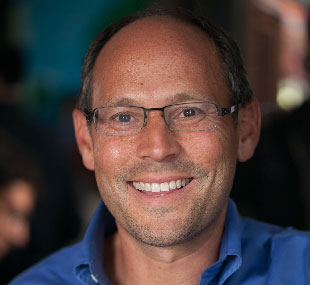
• VC Ed Sim on Seed-Stage, East Coast, Enterprise Investing

    Ed SimBack in December 2012, Fred Wilson of Union Square Ventures told entrepreneurs who crowded into the New York law offices of Cooley that they more should focus on enterprise technologies – and not simple analytics masquerading as such.

    A lot has changed since then, says Ed Sim, cofounder of the seed-stage fund Boldstart Ventures in New York, who suggests that when it comes to even pure enterprise tech – beyond enterprise applications – New York is catching up to the Bay Area. We talked last week about what he’s seeing and how his firm is funding what it’s finding. Our conversation has been edited for length.

    You raised a $1.5 million proof-of-concept fund in 2011, then another $17 million last year. So things must have gone well with that first fund.

    We sold companies to Salesforce (GoInstant), LinkedIn (Rapportive), Google (Divide), Akamai (Blaze.io), and Telenav (ThinkNear), so that beta test is proving fruitful.

    What size checks are you writing today?

    Between $250,000 and $350,000, with half [the fund] reserved for follow-on rounds. Our upper bound is $1.5 million. We shoot for an ownership stake of anywhere from 3 to 8 percent, depending on how early we get in.

    How do you differentiate Boldstart from other firms?

    It’s a leveraged model. We put together an advisory board of 12 folks — people we’ve funded over the years, many of whom have had successful exits – and they’re very helpful from a deal flow and diligence perspective.

    Also, [firm cofounder] Eliot [Durbin] and I kind of figure out one or two things the entrepreneur needs to get a Series A done, whether it’s to refine the products, or introduce the founder to a few customers. Then we’ll co-invest with a few other micro VCs to share the load in what we do. It’s been working thus far. Our portfolio companies have gone on to raise more than $250 million in follow-on financing.

    Which firms do you tend to work with?

    We’re probably one of few teams in New York with a big focus on enterprise at the micro VC level. Other investors elsewhere, including in Boston, do more. So for example, we’ve co-invested with Atlas Venture in two companies.

    Why aren’t more seed-stage investors focused on the enterprise in New York? Are there fewer angels and micro-VCs in New York with enterprise investing experience?

    Enterprise is where the money is and plenty is happening in New York, including a number of Israeli technology [companies relocating here] because of customer traction.

    There’s a lot of talent around, too. One of our portfolio companies, Divide, was started by a team that was building software products at Morgan Stanley. [Divide, whose software helps corporations manage their employees’ personal smartphones, was acquired last month by Google for undisclosed financial terms.] Security Scorecard, which is still operating in stealth mode, was founded by guys who were heading up the security division of Gilt Groupe. A third [portfolio company], Yhat, was founded by people who spun out of the analytics and data warehousing group of OnDeck Capital.

    For us, this whole angel scene is tied to the vagaries of the stock market. When it’s doing well, more are out [writing checks]. Now, people are in wait-and-see mode because no one is sure which way the market is going, so that’s more opportunity for us.

  • StrictlyVC: June 2, 2014

    Good morning, everyone! Hope you had an excellent weekend. —– Top News in the A.M.

    What developers want to hear from Apple this morning, as its Worldwide Developers Conference gets underway.

    Samsung has just announced the first smartphone running its Tizen operating system. More here.

    —–

    That’s It?

    Almost a week ago, some odious years-old emails written by Snapchat CEO Evan Spiegel were leaked to the media, and it’s a wonder how quickly their content seems to be have been swept under the rug.

    It’s understandable, to a point. Spiegel’s emails were written when he was a college student trying to impress his fraternity brothers, not the CEO of Snapchat. Emails are also private communications that, very arguably, should remain private.

    Besides, it isn’t like Spiegel holds public office. He never signed up to be a role model. He certainly shouldn’t be held accountable for a culture in which objectifying women not only remains socially acceptable but, for some, seems to border on a competitive sport.

    Still, Spiegel’s lone public apology, in which he said he was “mortified and embarrassed,” didn’t go far enough. How about some response from others close to the company, the same people who blog and tweet and talk so openly with reporters about how Silicon Valley is changing the world?

    On Friday, Stanford Provost John Etchemendy emailed the university’s student body to say the school is “positively ashamed” that the emails were sent by a Stanford student.

    If Snapchat’s influential investors are also ashamed of the noxious attitudes toward women that were conveyed in those emails, they should also say something. It’s easy enough to condemn their content without hanging Spiegel out to dry. And frankly, not doing anything seems like an implicit endorsement, as if what Spiegel wrote isn’t that bad. (It is.)

    “We can choose to turn a blind eye to such statements and chalk them up to youthful indiscretion,” wrote Etchemendy to Stanford’s undergraduates. “Or we can be more courageous, and affirmatively reject such behavior whenever and wherever we see it, even — no especially — if it comes from a friend, a classmate, or a colleague.”

    Nobody’s going to change Silicon Valley’s attitude towards women overnight, but here’s hoping Etchemendy’s message resonates not only with the men and women of Stanford but with Snapchat’s board, as well. A few choice words could help send the message that objectifying women isn’t okay, no matter how “hot” your company might happen to be.

    —–

    New Fundings

    AppDynamics, a six-year-old, San Francisco-based company whose application performance management software helps large companies monitor and manage their software environments, has raised up to $50 million in venture debt, according to Venture Capital Dispatch. The money comes from Silicon Valley BankMore here.

    Concurrent, a six-year-old, San Francisco-based company that develops big data applications that help its enterprise customers run their data processing apps, has raised $10 million in Series B funding led by Bain Capital Ventures. Earlier investors Rembrandt Venture Partners and True Ventures also participated in the round, which brings Concurrent’s total funding to $15 million.

    Edai, an eight-year-old, Chengdu, China-based peer-to-peer lending company that operates both online and features retail stores in China, has raised $10 million from Softbank China, according to Tech in Asia, which has much more on the story here.

    FluGen, a seven-year-old, Madison, Wi.-base biopharmaceutical company specializing in the prevention and treatment of seasonal and pandemic influenza, has raised $3.2 million in new funding, shows an SEC filing. The company has raised at least $6.5 million to date.

    Fortscale Security, a two-year-old, Tel Aviv-based company that’s trying to make it easier for companies to run big data analytics for cyber security, regardless of their technical know-how, has raised $10 million in Series A funding led by Intel Capital and Blumberg Capital. Earlier investors, including Swarth Group, also participated in the round, part of which will be used to relocate the company’s headquarters to New York.

    Govtoday, a six-year-old, Greater Manchester, England-based digital media platform dedicated to delivering the latest public sector and government news in the U.K., has raised $837,000 in new funding from Osprey Capital, along with the Greater Manchester Loan Fund. The company has raised a little more than $3 million altogether, shows Crunchbase.

    PerBlue, a six-year-old, Madison, Wi.-based mobile game developer, has raised $3 million in venture capital from investors, including Lightbank. PerBlue previously raised $800,000 from Golden Angels Investors and individual investors.

    Salsa Labs, a five-year-old, Washington, D.C.-based company whose software helps nonprofits to fundraise and organize their supporter bases, has raised $5 million from Maryland Venture Fund and earlier investor Edison Ventures. The company has raised $12 million to date, shows Crunchbase.

    —–

    New Funds

    BlueRun Ventures is raising a new, $150 million fund, shows a new SEC filing. VentureWire had reported back in December that the firm was planning to raise its fifth fund this year on the heels of some successful exits in 2013, including the sale of its portfolio company Waze to Google, and of Topsy Labs to Apple. BlueRun focuses on early-stage startups that use real-time data generated by smartphones. Some of its newer investments include QingCloud, a two-year-old, Beijing-based company that operates an on-demand real-time cloud computing platform and Banjo, a three-year-old, Redwood City, Ca.-based social media startup that gives users a way to read multiple social media conversations about particular topics of news in one screen. BlueRun had closed its fourth fund in 2009 with $240 million in capital commitments; it raised raised $315 million for its third fund in 2005.

    MPM Capital, an 18-year-old, Boston-based venture firm focused on healthcare startups in the U.S. and Europe, is raising a new, $380 million fund, according to an SEC filing that was first flagged by VentureWire. If the firm hits its target, the fund will be nearly 25 percent larger than the firm’s previous fund, which closed on just less than $300 million in 2010. MPM Capital ranked second, just behind Kleiner Perkins, in a ranking of investors with the most 2013 IPOs.

    Romulus Capital, a six-year-old, Cambridge, Ma.-based seed-stage fund that focuses primarily on Cambridge-area and New York-based startups, is about to close $50 million for its second fund, reports Business Insider, which profiles the firm’s 26-year-old cofounder, Krishna Gupta. According to an SEC filing, the firm began raising its current fund in 2012.

    Sequoia Capital announced Friday that it has raised $530 million for its fourth India-focused fund, capital that will be used to expand its investments in India and Southeast Asia, reports the International Business Times. “The two trends that we have been seeing is that mobile Internet is growing, and Indian start-ups are increasingly becoming global. We want to tap both these opportunities,” Shailendra Singh, a managing director with Sequoia Capital in Bangalore, told Mint, a local business newspaper. Sequoia, which entered the Indian market eight years ago, has since backed since more than 75 India-based startups, says the International Business Times.

    —–

    IPOs

    Renaissance Capital published an IPO pricing recap on Friday. Among its findings: In May, on average, the 21 IPOs were priced 10 percent below their midpoint and they averaged 8 percent on the first day, half the pop seen among the 94 IPOs in January through April.

    Rocket Internet, the online startup investor founded by Germany’s Samwer brothers, is planning an IPO that could value the company at more than $4 billion, according to Bloomberg’s sources. Reuters says the brothers have already hired banks Berenberg, Morgan Stanley and JPMorgan to review a potential listing on the Frankfurt exchange.

    —–

    Exits

    Desti, a 2.5-year-old, Menlo Park, Ca.-based online travel guide app company that was spun out of SRI International, has been acquired by a Nokia company for an undisclosed amount. Desti raised $2 million altogether, including from SRI InternationalCarmel Ventures andHorizons Ventures.

    —–

    The five largest donors in technology.

    Jeff Grabow is Ernst & Young’s new U.S. venture capital leader, the firm announced last last week. Grabow has been with the company for the last 27 years.

    Alex Karp, the cofounder and CEO of Palantir Technologies, is in no hurry to go public, despite that the 10-year-old company is expected to bring in $1 billion in revenue this year. An I.P.O. “is corrosive to our culture, corrosive to our outcomes,” Karp tells the New York Times. Palantir’s backers and clients, he adds, “do not see us as supernormal.”

    Jenny Lefcourt has joined the seed-stage firm Freestyle Capital as an investor. Lefcourt previously cofounded WeddingChannel.com, acquired by TheKnot in 2006; the wedding photo company Bella Pictures, acquired by a St. Louis-based photography service called CPI; and an e-commerce company, Markkit.

    Chikai Ohazama has joined Google Ventures as an entrepreneur-in-residence. Ohazama co-founded Keyhole, acquired by Google in 2004 (and now Google Earth). According to his Google Ventures’s bio, he was also one of the first product managers when the Geo group was initially formed within Google and helped lead efforts at the company like satellite imagery, monetization, and mobile maps. Before Keyhole, Ohazama was a member of the technical staff at Silicon Graphics.

    Peter Sunde, one of the founders of file-sharing website Pirate Bay, was arrested in southern Sweden over the weekend. Sunde had been on the run since 2012, when he was sentenced to prison and fined for breaching copyright laws. Reuters has more here.

    The Winklevoss twins may have just shelled out $14.5 million for a penthouse in Soho that looks pretty fabulous (of course). More here.

    —–

    Happenings

    Apple‘s annual developers conference kicks off a little later this morning in San Francisco. Here’s a link if you want to watch its live coverage.

    The Jefferies annual global healthcare conference also kicks off today. It’s in New York. Details are here.

    —–

    Job Listings

    The Ohio State University is looking for a director to lead its venture capital program, which plans to invest up to $100 million in venture funds. The school is in Columbus, Ohio.

    SolarCity, chaired by Elon Musk, is looking for a corporate development manager in San Mateo, Ca.

    —–

    Data

    One in seven U.S. consumers was notified that their personal data was breached last year, according to a new survey by Consumer Reports. Meanwhile, 11.2 million people fell for e-mail phishing scams and 29 percent of Americans online had their home computers infected with malware in the last year. More here.

    In recent years, U.S.-based VC firms have invested more capital in more startups than ever before in Asia, reports Pitchbook. In the four-year period from 2007 to 2010, they invested $4.3 billion across 417 financings. Since early 2011, they’ve invested $9.7 billion across 617 venture rounds in Asia. You can learn more here.

    —–

    Essential Reads

    Google plans to spend more than $1 billion on a fleet of satellites to extend Internet access to unwired regions of the globe.

    E-mail privacy hasn’t been updated in 28 years. This could be the bill to do it.

    Why investors never ever see the crash coming.

    —–

    Detours

    Three lost Dyson inventions.

    The ten universities to produce the most billionaires.

    Comic Mindy Kaling’s hilarious commencement speech at Harvard Law School.

    Fabien Cousteau, grandson of Jacques, is on the ocean floor right now, and he’s not coming up for air until July.

    —–

    Retail Therapy

    Haute Dogs.

    A nice big truck with a solar-paneled camper, to offset the truck.

    —–

    To sign up for StrictlyVC, click here. To advertise, click here.

  • StrictlyVC: May 30, 2014

    Good morning, dear readers. We’re having delivery issues again suddenly (sigh). If your spam folder ate your issue of StrictlyVC yesterday, here it is.

    Hope you have a wonderful weekend!

    —–

    Top News in the A.M.

    Europe’s highest court recently decided that its citizens could ask search engines to delete search results about themselves. Now Google has set up a way for people to make such requests, reports Re/code. Its “right to be forgotten” form is here.

    —–

    NatureBox shows why VCs are Tripping Over Each Other to Back Food-Delivery Startups

    Venture capitalists have seemingly gone bananas over food startups. According to VentureSource, in the last 14 months, 15 companies that deliver restaurant meals have been funded; meanwhile another 11 startups that sell general food products were funded last year – an industry record.

    Are investors overdoing it? Perhaps, though a peek into the business ofNatureBox, a two-year-old, San Carlos, Ca.-based snack-delivery company that has raised $28 million to date, highlights the opportunity they’re chasing. Earlier this week, I spoke with CEO Gautam Gupta, a former investor with General Catalyst (which is among NatureBox’s backers), about his 60-person company. Our chat has been edited for length.

    How fast is NatureBox growing?

    I started the company with a friend of mine from college two-and-a-half years ago. That first year, we shipped 50,000 [boxes of snacks to customers]. Last year, we shipped a million and we’re on track to triple that this year.

    Who, and where, are your customers?

    We have customers in all 50 states. We do skew toward a female audience. The largest segment is moms looking to find healthier options for their family and school lunches. Half of our customers are on the coasts; the other 50 percent are in the Midwest, where people don’t have access to Whole Foods or Trader Joe’s.

    How much are they paying for their Naturebox deliveries?

    We have three different offerings, so $20, $30, or $50 a month [based on how much you’re ordering]. You can choose the items yourself, from 120 different options in our catalog, or we can select them for you.

    From where are you shipping the products?

    We work directly with almond and fruit growers across the country to source the ingredients. We then have a network of contract manufacturers who work on the product across the country and who send the product to our two fulfillment centers in California. We’re also about to launch an Indiana-based fulfillment center, which is a big undertaking for us and will enable us to get our boxes to our East Coast and Midwest customers much faster.

    What convinced you that this was a big opportunity?

    The traditional model, through retail stores, really involves a fight for shelf space, with [food companies] having to develop products based on the retail calendar. What we’ve done is take a product development cycle that’s one to three years and condensed it to the point where an idea can be made into a product that’s in customers’ hands in two or three months. More, as soon as it reaches that customer, we’re getting feedback about what they like and don’t like to eat and what makes products more or less successful — data that drives the business [forward].

    What have you learned about your customers so far?

    We’ve learned how important the aspect of familiarity is to a new product. We have four or five flavors of wheat fig bars available to customers on our site, for example, because the taste is very similar to Fig Newton [cookies], though our products are made of whole grain and without any fructose syrup.

    You spent eight years, working at General Catalyst. Do you think VCs are beginning to plug too much money into me-too food startups?

    From an investors’ standpoint, the industry we’re going after is a trillion dollar market. It’s one of the last industries to be disrupted by the Internet.

    Will you be back in the market in 2014?

    We’ve had a lot of folks reaching out to us and have a lot of options. We’re kind of heads down, building the business, but if it continues to grow and we’re in a good position, it’s [possible].

    dropcam_300x250_learn

    New Fundings

    GrabTaxi, a young, Singapore-based taxi-calling app, has raised $15 million in Series B funding led by GGV CapitalQunar also participated in the round, along with earlier investor Vertex Venture Holdings, which had led GrabTaxi’s $10 million-plus Series A round.

    Grove Labs, a year-old, Somerville, Ma.-based company that’s planning to sell indoor gardening kits to consumers so they might grow their own, fresh food year round, has raised $2.05 million in seed funding, reports the WSJUpfront Ventures led the round, along with Felicis Ventures and Gary Vaynerchuk’s Vayner RSE. Other participants in the funding includedGalvanize VenturesTimothy Ferriss, and Ferriss’s AngelList syndicate.

    Hipmunk, a four-year-old, San Francisco-based startup whose travel search site and apps aim to help people book their travel faster and more efficiently, has raised $20 million in Series C funding from Oak Investment Partners. The company has now received $40.2 million from investors, including Webb Investment NetworkIgnition PartnersInstitutional Venture PartnersSV Angel and numerous individuals, among them Rich BartonErik BlachfordPaul Buchheit, and Matt Mullenweg.

    Lucid Software, a five-year-old, Draper, Ut.-based company that makes a suite of graphical web applications and design apps, has raised $5 million in fresh funding led by Kickstart Seed FundGrayhawk Capital also participated in the round, which brings the company’s total funding to $6 million, shows Crunchbase.

    Nix Hydra, a two-year-old, L.A.-based female-focused mobile gaming startup, has raised $5 million from Foundry Group, with participation from Buddy Media co-founder Mike Lazerow and other individuals. The company had previously raised $615,000 from seed investors.

    Qeexo, a 20-month-old, San Jose, Ca.-based mobile software startup that enables devices to respond differently based on which part of the finger is being used for input, has raised $2.3 million in Series A funding led by Sierra Ventures.

    RiskIQ, a five-year-old, San Francisco-based startup whose software continuously analyzes its customers’ web and mobile assets to detect malware, fraud and brand infringements, has raised $25 million in Series B funding led by Battery Ventures, with Summit Partners participating. The company has raised roughly $35 million to date.

    Survios, a year-old, L.A.-based technology platform that’s bringing full body motion technology into virtual reality games and other immersive tech, has raised $4 million in Series A funding led by Shasta Ventures. Other participants in the round included Felicis Ventures and World Innovation Lab.

    Tarsa Therapeutics, a five-year-old, Philadelphia, Pa.-based company that makes an oral calcitonin tablet to treat postmenopausal osteoporosis, has raised $7 million as a second tranche of a Series B round that Tarsa announced in May 2012. All of Tarsa’s earlier investors participated in the financing, including Foresite CapitalMVM Life Science Partners,Quaker Partners and Novo A/S. The company has raised at least $111 million to date, shows Crunchbase.

    Trifacta, a 2.5-year-old, San Francisco-based company that’s developing productivity platforms that make raw data easier to analyze, has raised $25 million in funding led by Ignition Partners. Earlier investors Greylock Partners and Accel Partners also participated in the round. The company had raised $12 million just six months ago led by Greylock and Accel. Altogether, investors, including XSeed Capital and Data Collective, have provided the company with $41.3 million.

    —–

    New Funds

    Double M Partners, a 2.5-year-old, L.A.-based firm, has raised $8 million for a new, second fund, according to an SEC filing that shows a $10 million target. Double M invests in Southern California-based Internet, media and communications startups. One of the outfit’s newest portfolio companies is Connectivity, a Burbank, Ca.-based business intelligence software company that raised $6.4 million in Series A funding in April, including from Rincon Venture Partners and Greycroft Partners. Double M was founded by former investment banker Mark Mullen (thus the “double M”).

    Epidarex Capital, an early-stage life science and health tech venture fund with offices in the U.K.; Bethesda, Md.; and Tokyo, Japan, has closed on approximately $80 million for a new fund dedicated to U.K. startups, particularly university spin-outs. The firm’s LPs include King’s College LondonEli Lilly and Co.European Investment FundScottish Enterprise and Strathclyde Pension Fund. The Telegraph has much more here.

    There’s a new SEC filing for a San Francisco-based fund called Palma Investments that has raised roughly $70 million from 10 parties and has ties to David Lee of SV Angel, who’s listed as the managing member of the fund. Asked for information about the filing, which lists a UPS office as its street address, Lee said he couldn’t comment. Most likely, the fund is a side vehicle that SV Angel used to lead Pinterest‘s $200 million Series F round earlier this month.

    —–

    Exits

    Cognitive Match, a five-year-old, New York-based display ad and predictive targeting platform, is being acquired by direct competitor Magnetic, a nearly six-year-old, New York-based company, for undisclosed terms. Cognitive raised a total of $10.2 million from investors, including Dawn CapitalMeridian Venture Partners, and Seraphin Partners. Magnetic has raised $15.3 million from investors, including NYC SeedNeu Venture CapitalEdison VenturesIA VenturesCharles River Ventures, and Founder Collective.

    HelloWallet, a five-year-old, Washington, D.C.-based web and mobile app that provides financial and holistic help for employees based on their salary and benefits package, has been acquired by the research company Morningstar for $52.5 million, reports InTheCapital. HelloWallet had raised $16.2 million from investors, including RevolutionTD FundGrotech and Morningstar itself.

    —–

    People

    Former Microsoft CEO Steve Ballmer has won the bidding for the NBA’s L.A. Clippers franchise with a $2 billion offer, elbowing out two groups, including one that included media mogul David Geffen. The sale agreement stipulates that Ballmer not move the team to Seattle.

    Foursquare’s chief operator officer, Evan Cohen, as well as its longtime head of business development, Holger Luedorf, are leaving the company in the coming weeks, reports Re/code. Cohen says he was “running low on gas, frankly, and it made sense for me to hand the baton off to a fresh new executive.” Matrix Partners’s entrepreneur-in-residence Jeffrey Glueck will become the company’s new COO.

    Wael Ghonim, an Egyptian-born Google employee who helped spark the country’s uprising in 2011, has joined Google Ventures as an entrepreneur-in-residence. The 33-year-old joined the unit late last year but Google waited on him to work out “visa issues” before going public with his role. Fortune has much more here.

    Harmonix, a 19-year-old, Cambridge, Ma.-based game maker has laid off 37 employees as part of a restructuring, reports VentureBeat. Harmonix, best known for its games “Rock Band” and “Guitar Hero,” is also replacing CEO Alex Rigopulos with Steve Janiak, the company’s head of publishing and business operations. Rigopulos will take up the title of chief creative officer.

    Popular technology reporter Mike Isaac is leaving Re/code for the New York Times, he announced yesterday, a move that will involve not only jumping to a new outlet, but also relocating from the Bay Area to Brooklyn. Isaac, says the Times, will be allowed to keep his Charmin bear avatar on Twitter.

    Earlier this week, investor Vinod Khosla lost a battle in his ongoing fight with the Surfrider Foundation over whether the public is owed access to Martin’s Beach, outside a $40 million property in San Mateo, Ca., that Khosla owns. On Wednesday, legislation aimed at upholding access to California beaches passed the California State Senate floor and is now headed to the Assembly. If it passes the Legislature, Khosla will have until Jan. 1, 2016, to broker a deal. The state could otherwise use eminent domain to acquire a portion of the property to reopen or create a new public access road. The San Mateo Daily Journal has more here.

    Mark Zuckerberg and wife Priscilla Chan announced yesterday in the San Jose Mercury News that they’re making a “$120 million commitment to support efforts to improve education for underserved communities in the Bay Area.” In his editorial, Zuckerberg suggested that, contrary to a recent New Yorker piece, his $100 million gift to the Newark, N.J. school system is beginning to show results. “For our next project,” writes Zuckerberg, “we’re investing in our local community.”

    —–

    Job Listings

    Gilt Groupe is looking for a business development director in New York.

    Proofpoint is looking for a vice president of business development in Sunnyvale, Ca.

    —–

    Data

    Venture capital finally outperformed the DJIA, Nasdaq and S&P 500 in the fourth quarter of last year, according to the National Venture Capital Association‘s newest performance index. Even better, 10-year venture returns (9.7 percent) slightly outpaced the indices, which returned 7.2 percent (DJIA), 7.6 percent (Nasdaq) and 7.4 percent (S&P 500). Venture funds are still trailing the public exchanges over the last 1-, 3-, and 5-year periods. (Sniff.) More here.

    The 20 most valuable enterprise tech companies in the world — for now.

    —–

    Essential Reads

    A smartwatch is coming from Microsoft, unexpectedly.

    At long last, someone has produced a great calendar app for Android and the Web, reports The Verge.

    —–

    Detours

    Twenty-seven of the best Google doodles.

    How to tell someone’s age, when all you know is her name.

    America’s ‘It’ School? It’s 2,700 miles from Harvard.

    ——

    Retail Therapy

    Wireless headphones.

    Smart soccer balls.

    You can never have too much storage, are we right?

    —–

    To sign up for StrictlyVC, click here. To advertise, click here.

  • NatureBox Shows Why VCs Are Rushing to Back Food-Delivery Companies

    naturebox_121912-070.1363818457Venture capitalists have seemingly gone bananas over food startups. According to VentureSource, in the last 14 months, 15 companies that deliver restaurant meals have been funded; meanwhile another 11 startups that sell general food products were funded last year – an industry record.

    Are investors overdoing it? Perhaps, though a peek into the business of NatureBox, a two-year-old, San Carlos, Ca.-based snack-delivery company that has raised $28 million to date, highlights the opportunity they’re chasing. Earlier this week, I spoke with CEO Gautam Gupta, a former investor with General Catalyst (which is among NatureBox’s backers), about his 60-person company. Our chat has been edited for length.

    How fast is NatureBox growing?

    I started the company with a friend of mine from college two-and-a-half years ago. That first year, we shipped 50,000 [boxes of snacks to customers]. Last year, we shipped a million and we’re on track to triple that this year.

    Who, and where, are your customers?

    We have customers in all 50 states. We do skew toward a female audience. The largest segment is moms looking to find healthier options for their family and school lunches. Half of our customers are on the coasts; the other 50 percent are in the Midwest, where people don’t have access to Whole Foods or Trader Joe’s.

    How much are they paying for their Naturebox deliveries?

    We have three different offerings, so $20, $30, or $50 a month [based on how much you’re ordering]. You can choose the items yourself from 120 different options in our catalog, or we can select them for you.

    From where are you shipping the products?

    We work directly with almond and fruit growers across the country to source the ingredients. We then have a network of contract manufacturers who work on the product across the country and who send the product to our two fulfillment centers in California. We’re also about to launch an Indiana-based fulfillment center, which is a big undertaking for us and will enable us to get our boxes to our East Coast and Midwest customers much faster.

    What convinced you that this was a big opportunity?

    The traditional model, through retail stores, really involves a fight for shelf space, with [food companies] having to develop products based on the retail calendar. What we’ve done is take a product development cycle that’s one to three years and condensed it to the point where an idea can be made into a product that’s in customers’ hands in two or three months. More, as soon as it reaches that customer, we’re getting feedback about what they like and don’t like to eat and what makes products more or less successful — data that drives the business [forward].

    What have you learned about your customers so far?

    We’ve learned how important the aspect of familiarity is to a new product. We have four or five flavors of wheat fig bars available to customers on our site, for example, because the taste is very similar to Fig Newton [cookies], though our products are made of whole grain and without any fructose syrup.

    You spent eight years working at General Catalyst. Do you think VCs are beginning to plug too much money into me-too food startups?

    From an investors’ standpoint, the industry we’re going after is a trillion dollar market. It’s one of the last industries to be disrupted by the Internet.

    Will you be back in the market in 2014?

    We’ve had a lot of folks reaching out to us and have a lot of options. We’re kind of heads down, building the business, but if it continues to grow and we’re in a good position, it’s [possible].

    Before you go, which is better, life as a VC or as an entrepreneur?

    I started with General Catalyst when I was in college, and it was the only real job I had before starting NatureBox . . . I’ve now learned that building a company is so much of a team sport, versus investing, which is more about being an individual contributor. I’m definitely learning a lot, but I also really love the aspect of being able to do something and see the impact of that and really playing in the game. This job is a lot more fun.

    Sign up for our morning missive, StrictlyVC, featuring all the venture-related news you need to start you day.

  • StrictlyVC: May 29, 2014

    Good Thursday morning! (By the way, is StrictlyVC the only one who didn’t go to the Bruno Mars show in Oakland last night? FOMO is real, people.)

    —–

    Top News in the A.M.

    Ten things you might have missed at the second day of the Code conference.

    —–

    Wearable That Relies on Your Heartbeat Nears Series A Close

    If things go its way, you may be hearing more about Bionym, if not using its product. The spin-off from the University of Toronto has been developing a wristband that distinguishes wearers by their heartbeat. The big idea: there’s no reason to use keys and pass codes and credit cards when we can be identified instead through our unique electrocardiography.

    A lot of pieces have to fall into place for the wristband, called the Nymi, to work out. But because the potential also seems substantial, I asked company president Andrew D’Souza to walk me through what’s happening as the company prepares to dot the i’s and cross the t’s on a Series A round that it’s closing.

    I know the company’s founders studied biometrics and cryptography at the University of Toronto. What’s the core technology here?

    It’s a set of algorithms that helps identify you based on your unique ECG. This was a tech licensing company initially, but we realized the way this functionality should be put out in the world is through a wearable wristband.

    Which still hasn’t been produced yet, is that right?

    We’ll start the production efforts over the summer and expect to ship the first 10,000 [units] next fall.

    How confident are you of that?

    It’s a fair question. [The successful production of the Nymi] was the biggest risk for me in joining the company [last year]. But we bought in James Elson, who led the complete product development cycle for the AirHog, the best-selling radio-controlled helicopter in the world. He has shipped about 8 million units, spent a third of his career in China, and has all kinds of relationships and knows what to ask.

    How is the Nymi designed, loosely?

    It’s basically a polymer wrapped around a hard plastic puck that houses the electronics, like a Fitbit, which also has an enclosed puck. Jawbone’s UP band and Nike’s FueldBand use flex circuits, which introduce more manufacturing risk.

    Something like 2.7 million people have already purchased wearable bands, most of them fitness trackers – and most of them Fitbits. Is there any concern over asking people to put another piece of hardware around their wrist?

    No, we think the wearable market is where mobile was in the ’90s. Most of the devices sold so far have a single use case – like tracking steps, or notifying me when I get texts. Going forward, we’ll see platforms emerge. When Apple announces its iWatch, [it’s likely to be] a health-focused platform. Android Wear, [Google’s software platform for wearables] will [center] on context-aware, location-based services. We think there’s also an opportunity for an [identity-centric] personalized platform, and that there’s a market of people who will prefer it.

    What about all the peripherals you’ll need for Nymi to work?

    We’ve had phenomenal interest from Fortune 100 companies about building applications integrations into some of their products. We have an open SDK, so in the same way that people build apps on iPhones, we’re giving early access to key partners [to create related apps]. Essentially, we want to allow people to bypass whatever credential they use and use Bionym as a proxy for it, from laptops and smart phones to payment companies to home security.

    More than 7,000 developers have signed up for the SDK – from college students to major corporations. That’s what we’re most excited about.

    You’re accepting pre-orders at your site. Will you sell exclusively through the site or will people be able to order the Nymi through major retailers?

    Amazon is essentially ready to start selling and other major retailers have reached out about listing us. But we’ve been hesitant to go to physical or digital retail until we know exactly why people are ordering our devices and who they are.

    dropcam_300x250_learn

    New Fundings

    51Fanli, an eight-year-old, Shanghai-based rebate shopping guide platform, has raised $20 million in Series B funding led by SIG China, according to Chinese media reports. The company had previously raised $10 million in Series A funding from Qiming Venture Partners and Steamboat Ventures.

    Apixio, a five-year-old, San Mateo, Ca.-based company that extracts and analyzes clinical unstructured and coded data for healthcare industry clients, has raised a $13.5 million Series C round from Bain Capital Ventures, along with numerous unnamed individual investors. The company has raised at least $22.6 million altogether, shows Crunchbase.

    ARMO BioSciences, a 1.5-year-old, Redwood City, Ca.-based clinical-stage biotechnology company that’s trying to turn a drug licensed from Merck & Co. into a cancer treatment, has raised $30 million in Series B funding by NanoDimension. Earlier investors Kleiner Perkins Caufield & ByersOrbiMed and DAG Ventures also participated in the round, which brings the company’s total funding to $50 million.

    Bindo, a six-month-old, New York-based company that’s come up with an iPad point-of-sale system and associated cloud-based payment platform for small merchants, has raised $1.8 million in seed funding co-led by Gary VaynerchukEast Ventures, and Metamorphic Ventures.

    Coupang, a four-year-old, Seoul-based e-commerce company that offers goods ranging from fashion to produce, has raised $100 million in financing led by Sequoia Capital Global Equities and Sequoia Heritage, with participation by earlier investors Greenoaks Capital Management, Rose Park Advisors’ Disruptive Innovation Fund and LaunchTime. Others of the company’s earlier investors include Maverick CapitalAltos VenturesBill AckmanClay Christensenand others. The company is now valued at $1 billion-plus, it says. The company’s CEO tells Dealbook that more than 70 percent of its transactions are done on mobile devices.

    Datalogix, a five-year-old, Westminster, Co.-based company that sells offline purchase data to giant publishers, has closed a $45 million round led by Wellington Management Company. Earlier investor investor Institutional Venture Partners joined the round, investing more than pro rata. The round is “incremental to the recently announced investment in Datalogix by Jim Breyer’s Breyer Capital,” says the company. (In April, the WSJ reported that Breyer had invested “a significant” amount in the company.) Datalogix has raised at least $111 million to date, shows Crunchbase.

    ExtraHop, a seven-year-old, Seattle-based app management system, has raised raised $41 million in Series C funding led by Technology Crossover Ventures. Other participants in the round include earlier investors Meritech Capital Partners and Madrona Venture Group.

    HackerOne, a 19-month-old, Bay Area-based security firm whose platform makes it easy for companies to report their bug tracking and process their flaw reports, has raised $9 million in funding led by Benchmark. TechCrunch has much more on the startup, which has ties to Facebook and Microsoft, here.

    Matrixx Software, a 24-year-old, Mountain View, Ca.-based developer of online charging and subscriber policy management software, has raised an undisclosed amount of new funding led by Telstra Ventures. Earlier investors Swisscom VenturesInnovacomGreylock PartnersAdams Street Partners and Tugboat Ventures also participated in the round. Previously, the company had raised at least $33.6 million, shows Crunchbase.

    MedCPU, a six-year-old, New York-based company whose real-time clinical decision support tool rides atop most hospital and ambulatory electronic medical records and “reads” the complete clinical information to deliver clinical care advice, has raised $9.3 million in Series B funding from investors that include Merck Global Health Innovation FundEaston Capital Investment Group and New Richmond Ventures. The company has raised at least $10.9 million to date, shows Crunchbase.

    Message Bus, a nearly four-year-old, San Francisco-based application service that enables messaging across different email and mobile infrastructures, has raised $4 million in funding led by previous investor True Ventures. Other earlier investors North Bridge Venture Partnersand Ignition Partners also participated in the round, which brings the company’s total funding to $18 million, it says.

    Neuway Pharma, a months-old, Bonn, Germany-based company that focuses on the preclinical and clinical development of therapeutics for treating orphan brain diseases, has raised $3.6 million in Series A financing led by Wellington Partners. The company is the first spin-off of the Life Science Inkubator in Bonn.

    Newlans, an 11-year-old, Acton, Ma.-based fabless semiconductor company that makes a reconfigurable broadband analog signal processing architecture, has raised $5 million from Verizon Ventures to complete its Series B financing round. Intel Capital, with the participation of Paladin Capital and Lockheed Martin, had led the Series B, which initially closed with $15 million in February. The company has raised at least $23.9 million to date.

    PatientPay, a nearly six-year-old, Durham, N.C.-based patient billing and payment services company, has raised $2.5 million in funding led by Mosaik Partners, a new, San Francisco-based firm that just held a first close on $15 million for its debut fund. PatientPay has raised $6 million to date.

    Rodin Therapeutics, a year-old, Cambridge, Ma.-based biotechnology company that’s focused on creating therapeutics for neurological disorders, has raised $12.9 million in Series A funding led by earlier investors Atlas Venture and Johnson & Johnson Development Corporation. The company raised an undisclosed amount of seed funding from both firms last summer.

    Standard Treasury, a year-old, San Francisco-based company that offers standard APIs that make it easier for businesses to transact with their banks, has raised $2.7 million in seed funding. Investors in the round include RRE VenturesIndex VenturesData CollectiveSV AngelY CombinatorJay Mandelbaum, a former chief operating officer of JP Morgan; and Gmail creator Paul Bucheit. The WSJ has much more here.

    Swipely, a 4.5-year-old, Providence. R.I.-based company whose online software works with point-of-sale systems and terminals used by independent businesses to manage their credit card processing, reward programs and more, has raised $20 million in Series C funding. The Pritzker Group led the round; previous investors Shasta Ventures and First Round Capital also participated. The company has now raised $40.5 million altogether, shows Crunchbase.

    XLV Diagnostics, a three-year-old, Thunder Bay, Ontario-based company that makes low-cost, next-generation digital mammography machines, has raised $3 million in Series A funding from the Boston-based Bernard M. Gordon Charitable Remainder Unitrust. The company had previously raised $600,000 in funding from the regional development organization FedNor and the Northern Ontario Heritage Fund.

    —–

    New Funds

    Omron, a Japan-based manufacturer of control equipment, factory automation systems, electronic components, automotive electronics, ticket vending machines and medical equipment, is earmarking an estimated 3 billion yen ($29.1 million) for agricultural and life sciences startups over the next three years, reports the Nikkei.

    Spark Capital, the nine-year-old, Boston-based venture capital firm, closed its first-ever growth capital fund yesterday with $375 million that was raised over “several” months. (Spark is also investing from a $450 million early-stage fund closed last year.) The head of the new fund is Jeremy Philips, formerly a managing partner of Occam Partners, as well as an executive at News Corporation. He tells Dealbook more about his team’s plans, including that they will be aiming to invest slugs of $15 million and $30 million in companies that already have roughly $1 billion in revenue but aren’t yet ready to go public. Bijan Sabet, a partner at Spark, tells Dealbook: “We’re planning on helping companies scale, whether they’re existing companies of Spark or not.”

    —–

    IPOs

    Only two companies have set terms for upcoming IPOs in the past week, notes Renaissance Capital, calling it a reflection of “both fallen tech and biotech valuations and the typically lower volume around a holiday week.” More here.

    Twitter’s shares rose nearly 11 percent yesterday, to $33.77, after Nomura Equity raised its rating to buy from neutral, with a price target of 43. Investors Business Daily notes that the shares are still 55 percent off their peak price of $74, reached roughly one month after the company’s November IPO.

    —–

    Exits

    Apple finally announced yesterday that it has acquired the subscription streaming music service Beats Music, and Beats Electronics, which makes Beats headphones, speakers and audio software. As part of the acquisition, Beats co-founders Jimmy Iovine and Dr. Dre will join Apple, Iovine in a full-time capacity, Dr. Dre, whose real name is Andre Young, for “as much as it takes,” he said yesterday. Apple is acquiring the two companies for a total of $3 billion, including $400 million that will vest over time. The Beats brand will remain separate from Apple’s, and Apple will offer both Beats’s streaming music service and premium headphones, reports the New York Times.

    Distimo, a five-year-old, Netherlands-based app analytics and data company, has been acquired by its direct competitor, App Annie, which has been looking to expand into Europe. As part of the transaction, App Annie announced a fresh $17 million in funding yesterday from earlier investors IDG Capital PartnersGreycroft Partners and Sequoia Capital; the company has now raised $39 million altogether. Distimo had raised an undisclosed amount of funding from Wellington Partners.

    —–

    People

    Highly disturbing emails written by Snapchat cofounder Evan Spiegel during his (not-so-distant) college years were leaked to the media yesterday. Spiegel quickly issued an apology for the “idiotic emails,” saying they “don’t reflect my views toward women.” The media world has seemed to let the issue go.

    —–

    Job Listings

    Spark Capital is hiring a team of six to eight people for its new growth fund. (See “New Funds.”) Time to invite a partner or two out for coffee?

    —–

    Happenings

    VentureBeat’s MobileBeat conference is coming up in July in San Francisco. You can register for it here.

    —–

    Data

    Mary Meeker‘s Internet trends presentation, 2014. (The gist: There’s no tech bubble. Also, people love using the Internet from their phones, and that’s only growing faster.)

    What startup founders typically pay themselves, or should, according to their venture investors.

    —–

    Essential Reads

    As promised Google has disclosed its diversity record, and it’s not good. Among the data released: 79 percent of the company’s leadership positions are occupied by men, 72 percent of whom are white.

    —–

    Detours

    No, really? The Ice Diet?

    What a hiring manager scans for when reviewing resumes.

    Sixty years of nuclear energy (slide show).

    —–

    Retail Therapy

    Inflatable hot tub, you look right up our alley.

    Topanga Canyon, a “limited-edition, trail-foraged fragrance that takes you on a springtime hike through the coastal mountains of California,” and you only need your nostrils to get there.


  • Wearable that Relies on Your Heartbeat Nears Series A Close

    bionym_nymi_colors_stackedIf things go its way, you may soon be hearing more about Bionym, if not using its product. The spin-off from the University of Toronto has been developing a wristband that distinguishes wearers by their heartbeat. The big idea: there’s no reason to use keys and pass codes and credit cards when we can be identified instead through our unique electrocardiography.

    A lot of pieces have to fall into place for the wristband, called the Nymi, to work out. But because the potential also seems substantial, I asked company president Andrew D’Souza to walk me through what’s happening as the company prepares to dot the i’s and cross the t’s on a Series A round that it’s closing.

    I know the company’s founders studied biometrics and cryptography at the University of Toronto. What’s the core technology here?

    It’s a set of algorithms that helps identify you based on your unique ECG. This was a tech licensing company initially, but we realized the way this functionality should be put out in the world is through a wearable wristband.

    Which still hasn’t been produced yet, is that right?

    We’ll start the production efforts over the summer and expect to ship the first 10,000 [units] next fall.

    How confident are you of that?

    It’s a fair question. [The successful production of the Nymi] was the biggest risk for me in joining the company [last year]. But we bought in James Elson, who led the complete product development cycle for the AirHog, the best-selling radio-controlled helicopter in the world. He has shipped about 8 million units, spent a third of his career in China, and has all kinds of relationships and knows what to ask.

    How is the Nymi designed, loosely?

    It’s basically a polymer wrapped around a hard plastic puck that houses the electronics, like a Fitbit, which also has an enclosed puck. Jawbone’s UP band and Nike’s FueldBand use flex circuits, which introduce more manufacturing risk.

    Something like 2.7 million people have already purchased wearable bands, most of them fitness trackers – and most of them Fitbits. Is there any concern over asking people to put another piece of hardware around their wrist?

    No, we think the wearable market is where mobile was in the ’90s. Most of the devices sold so far have a single use case – like tracking steps, or notifying me when I get texts. Going forward, we’ll see platforms emerge. When Apple announces its iWatch, [it’s likely to be] a health-focused platform. Android Wear, [Google’s software platform for wearables] will [center] on context-aware, location-based services. We think there’s also an opportunity for an [identity-centric] personalized platform, and that there’s a market of people who will prefer it.

    What about all the peripherals you’ll need for Nymi to work?

    We’ve had phenomenal interest from Fortune 100 companies about building applications integrations into some of their products. We have an open SDK, so in the same way that people build apps on iPhones, we’re giving early access to key partners [to create related apps]. Essentially, we want to allow people to bypass whatever credential they use and use Bionym as a proxy for it, from laptops and smart phones to payment companies to home security.

    More than 7,000 developers have signed up for the SDK – from college students to major corporations. That’s what we’re most excited about.

    You’re accepting pre-orders at your site. Will you sell exclusively through the site or will people be able to order the Nymi through major retailers?

    Amazon is essentially ready to start selling and other major retailers have reached out about listing us. But we’ve been hesitant to go to physical or digital retail until we know exactly why people are ordering our devices and who they are.

    Sign up for our morning missive, StrictlyVC, featuring all the venture-related news you need to start you day.

  • StrictlyVC: May 28, 2014

    Is it Friday yet? (Kidding!) Hope you have a great Wednesday, everyone.

    —–

    Top News in the A.M.

    Alibaba just made a huge investment in an overseas postal agency.

    Federal Trade Communication report released yesterday is providing an unusual window into the system of commercial surveillance.

    —–

    Cybersecurity VC David Cowan on Hackers, Valuations, and What’s Hot Now

    When the news emerged last week that Defense.net, a cloud service that defends data centers and applications from cyber attacks, was selling to publicly traded F5 Networks, some were surprised it was being swept up so soon. Its founder, Barrett Lyon, had started two other cyber security companies; it had been incubated at Bessemer Venture Partners just last year. Could it be that the market – spending for which is expected to hit $77 billion this year – is peaking right now?

    Longtime cybersecurity investor David Cowan, a general partner at Bessemer’s Palo Alto, Ca., insists that’s far from the case. Rather, in a call yesterday, he said that Defense.net’s business is “an expensive one to build. There’s a reason there aren’t a lot of companies out there that provide this kind of business. I would have been happy to keep going, but I can understand why the team found it attractive to take a strategic multiple when it was offered.”

    Here’s some more from that conversation yesterday, edited for length:

    A lot of businesses complain that it costs more to safeguard their systems than deal with a breach. What are you seeing?

    I wouldn’t say that companies would rather spend to remedy the breach rather than prevent it, but [there’s now an] awareness that breaches are inevitable, so part of any cyber plan has to be preparations for dealing with a breach. There are startups out there today that all they do is sell breach-response services to help companies prepare for that inevitability, though those aren’t particularly interesting to me because [they] don’t use a lot of technology to do it.

    As we connect more things to the Internet, more things become vulnerable to attack, including heart monitors and other medical devices. Is that an area that interests Bessemer? Do you have a vertical approach?

    We generally don’t have a vertical approach, but having said that, I do think the medical device vertical is pretty interesting. There’s a vast sea of medical devices out there and hospitals that are running on old Windows machines, many of which are no longer even supported by Microsoft. And those connected machines are likely swamps for malware. And nobody has any visibility into them. Companies that are going after I that . . . it’s an interesting vertical.

    What’s one thing you’re seeing in cybersecurity right now that wasn’t possible until recently?

    I invested in this company, Internet Identity, because they enable companies to do what no one has done before, which is to collaborate on cyber defense.

    There’s a lot of collusion by attackers in the form of exchanges, [including] people buying and selling [personally identifiable information]. As a result, it’s easy for someone to ramp up quickly as a cyberattacker. But until 18 months ago, no one ever talked openly about security infrastructure outside of their company or government agency. It was viewed as terribly private and intimate.

    Since then, there’s been a really a big shift in people’s understanding that the private and the public sector all need to work together to share cyberintelligence, so that if an attacker is identified in one place, all doors [will be] closed [to that person] in buildings everywhere. That requires a lot of technology . . .and that’s what Internet Identity has developed and built. It now supports 30 federal agencies and at least three of the world’s six most valuable technology companies, and everyone who joins the exchange gets the benefit of all that intelligence in real time on their own network. It’s kind of like the social network of cyber; you share and you get back [a lot], and once someone joins the exchange, he or she naturally wants to invites lots of friends into the exchange as well.

    You say Defense.net’s sale wasn’t related to valuations. What’s happening out there, though?

    There’s been a huge increase in the value and multiples for companies selling cloud services to enterprises [in recent years]. With a huge pullback this year in the public market, I think it’s fair to expect that the private markets will have to respond accordingly . . .generally, when the [public] market goes up, it’s a matter of weeks before the private market does the same. When it goes down, it’s a matter of months [before private markets follow suit].

    dropcam_300x250_learn

    New Fundings

    Acquia, a seven-year-old, Burlington, Ma.-based startup whose software enables companies to build and maintain their Drupal-based websites, has raised $50 million in new funding, led by New Enterprise AssociatesSplit Rock Partners and existing investors North Bridge Venture PartnersSigma PartnersInvestor Growth Capital, and Tenaya Capital also participated in the round, which brings the company’s total funding to $118.6 million.

    Aver Informatics, a four-year-old, Green Bay, Wi.-based company whose data management tools help hospitals and other health care providers simplify the process of billing insurance companies, has raised $8.5 million from Drive Capital and GE Ventures. The company has raised $11 million to date, shows Crunchbase.

    DemystData, a four-year-old, New York-based software company that sells predictive analytics to financial services clients, has raised $5 million in Series A funding from a string of investors, including Arbor VenturesSingTel Innov8Notion CapitalP2P Equity Partners and Wonga founder Errol Damelin.

    Distil Networks, a three-year-old, Arlington, Va.-based com pay whose cloud-based service protects from scraping and malicious bots, has raised $10 million in Series A funding led by Foundry Group and Bullet Time Ventures. Other participants in the round included ff Venture CapitalIDEA Fund Partners and Militello Capital. The company has raised $14 million to date.

    Ecwid, a 5.5-year-old, Ulyanovsk, Russia-based e-commerce platform that helps small businesses create online stores, has raised $5 million in Series B funding led by iTech Capital, with participation from earlier investor Runa Capital.

    Fundrise, a two-year-old, Washington, D.C.-based company that helps any resident (and not just accredited investors) invest in properties in their local market, has raised more than $31 million in its first round of funding led by Renren, the China-based social networking company. Other investors in the round include Collaborative Fund; L.A. developer Rising Realty Partners; the Ackman-Ziff Real Estate Group; executives of Silverstein Properties; and Richard Boyle, former chief of Loopnet, an online commercial real estate listing service.

    Fyusion, a year-old, San Francisco-based stealth startup developing advanced 3D image processing technologies, has raised $3.35 million in funding led by New Enterprise Associates and UTEC, with participation from angel investors including Sun Microsystems co-founder Andreas Bechtolsheim and James Joaquin, the former CEO of Ofoto & Xoom.

    Infinit, a two-year-old, Paris-based company whose app uses peer-to-peer technology to boost unlimited-size file sharing between two users, has raised $1.8 million in funding from Alven Capital and 360 Capital Partners. The company has raised $2.2 million altogether.

    Jobaline, a 1.5-year-old, Kirkland, Wa.-based bilingual, digital marketplace for hourly jobs, has raised $7 million in Series B funding led by Trilogy Equity PartnersFounders Co-opMadrona Venture Group and angel investors also participated in the round, which brings Jobaline’s total funding to roughly $11.3 million.

    Lua Technologies, a three-year-old, New York-based mobile workplace collaboration software company, has raised a $7.5 million Series A funding round led by Abundance Partners. Individual investors Strauss Zelnick and Aaron Stone also participated in the round. The company has raised $10 million to date, shows Crunchbase.

    Need, a 15-month-old, Dallas, Tex.-based online magazine and retailer for men “who hate to shop,” says TechCrunch, has raised $500,000 in seed funding from individual investors. The company has raised $615,000 altogether, shows Crunchbase.

    Spark Therapeutics, a nine-month-old, Philadelphia, Pa.-based gene therapy company focused on helping people with rare, degenerative eye diseases, has raised $72.8 million in Series B funding led by Sofinnova VenturesBrookside CapitalDeerfieldRock Springs CapitalT. Rowe PriceWellington Management, and two undisclosed dedicated health-care funds. The company’s total funding to date is $122.8 million. (The Children’s Hospital of Philadelphia, which spun out Spark last fall, committed $50 million to the venture at the time.)

    SunFunder, a two-year-old, San Francisco-based crowdfunding platform for financing solar energy projects in rural villages, has raised a Series A round of undisclosed size led personally by investor Vinod Khosal, though as VentureWire notes, it recently filed paperwork showing it had raised $2.2 million of a $2.7 million round.

    Thatgamecompany, an eight-year-old, L.A.-based video game development studio that has created three games for the Playstation Network, including an award-winning game called “Journey,” has raised $7 million in funding led by the China-based private equity firm Capital Today. Other participants in the round, which brings the company’s total funding to $12.5 million, include Benchmark CapitalKleiner Perkins Caufield & Byers, and half a dozen other investors.

    XCOR Aerospace, a 15-year-old, Mojave, Ca.-based maker of rocket-powered vehicles, propulsion systems and more, has raised $14.2 million in Series B funding led by Space Expedition Corporation of the Netherlands. The round also included many existing and new investors including board member Esther Dyson, Chicago Cubs co-owner Pete Ricketts, and numerous Silicon Valley entrepreneurs and early-stage investors.

    —–

    New Funds

    San Francisco firm Mosaik Partners has held a $15 million close on its inaugural fund, reports VentureSource. Founding partner Miles Kilburn served as an EVP at Concord EFS, a payroll-processing company that merged with First Data in 2004. The firm’s other partner, Howard Mergelkamp, was a founding member of corporate ventures and advisory services at investment firm BlackRock. The firm’s LPs reportedly include investors from the payments and financial industries.

    —–

    IPOs

    The IPO market is working as it should – for now, at least, argues PandoDaily.

    —–

    Exits

    AngioScore, an 11-year-old, Fremont, Ca.-based company that makes scoring balloon catheters to treat cardiovascular and peripheral artery diseases, is being acquired for $230 million in cash and stock by medical device maker Spectranetics Corp. AngioScore had raised at least $30 million from investors, including Telegraph Hill PartnersPsilos Group,QuestMark PartnersPelion Venture PartnersCalifornia Technology Ventures, and Innomed Ventures. In 2011, the company also raised $11 million from Saints Capital in San Francisco (though StrictlyVC doesn’t know if those were primary or secondary shares).

    Asia Pacific Telecom, the Taiwanese mobile telecom operator, is selling itself to Apple’s supplier Foxconn Technology Group for a reported $390 million; the latter reportedly wants to expand its presence in Taiwan’s fledgling 4G telecoms market. Reuters has more here.

    AtheroMed, a 7.5-year-old, Menlo Park, Ca.-based company that develops treatments for peripheral arterial disease, including an FDA-approved atherectomy catheter system, is being acquired for $115 million by Volcano Corp., a publicly traded company best known for its imaging technology. AtheroMed had raised at least $37.7 million from investors, shows Crunchbase, including US Venture PartnersCanaan PartnersThe Vertical Group, and Kaiser Permanente Ventures.

    Graphicly, a 4.5-year-old, Palo Alto, Ca.-based company whose online platform automates the self-publishing process by helping authors and publishers distribute and promote their digital content across various e-book marketplaces, is being acquired by its peer, Blurb, an indie book and magazine publishing platform. The move, says TechCrunch, is an acqui-hire. Graphicly had raised $10 million from investors, includingVenture51500 StartupsDundee Venture CapitalMercury Fund,Ecosystem VenturesTechstars, and Northstar Ventures.

    —–

    People

    Investor Marc Andreessen talks with Fast Company about his love of Twitter (among other things). Says Andreessen: “I’m an introvert when it comes to face-to-face conversations. But something that lets you talk to 83,000 people while you’re wearing your boxer shorts and drinking a glass of Scotch? What could be better?”

    Venture capitalist Brad Feld thinks VCs should recycle their management fees. He explains why here.

    Reputation.com founder Michael Fertik goes to astonishing lengths to burnish his online image in this mockumentary, which has some very funny moments. (Mike Judge, take note.)

    Paul Hsiao has joined Canvas Venture Fund, the early-stage venture capital firm that spun out of Morgenthaler Ventures last year, as a general partner and founding managing member. Hsiao joins the firm from New Enterprise Associates, where he spent the last decade, focusing mostly on enterprise software and marketplace companies.

    —–

    Job Listings

    ORIX Corporate Capital is looking for someone at the principal level to lead its venture lending practice in Washington, D.C. The 13-year-old company provides senior and subordinated loans to mid-and-late stage venture-backed companies.

    —–

    Happenings

    All kinds of interesting news is emerging from this week’s Re/code conference, and it’s barely gotten underway. (If you aren’t there, you can stay up to date on Twitter via the hashtag #codecon.)

    —–

    Data

    CB Insights looks at which venture capital firms have the strongest mobile portfolio based on ITunes App Store rankings. Check out its findings here.

    —–

    Essential Reads

    Google has finally built its own car from scratch. And it looks like a gondola with wheels.

    —–

    Detours

    Is Thomas Piketty’s math wrong?

    Manhattan’s Billionaires’ Row is spreading south.

    Team building for the self-employed!

    —–

    Retail Therapy

    Thirty-seven things to do this summer in the Bay Area. (A great list worth bookmarking. Written for men, but notwithstanding some questionable advice about summer shoes and haircuts, useful for everyone.)

  • Cybersecurity Investor David Cowan on Hackers, Valuations, and What’s Hot

    David CowanWhen the news emerged last week that Defense.net, a cloud service that defends data centers and applications from cyber attacks, was selling to publicly traded F5 Networks, some were surprised it was being swept up so soon. Its founder, Barrett Lyon, had started two other cyber security companies; it had been incubated at Bessemer Venture Partners just last year. Could it be that the market – spending for which is expected to hit $77 billion this year – is peaking right now?

    Longtime cybersecurity investor David Cowan, a general partner at Bessemer’s Palo Alto, Ca., insists that’s far from the case. Rather, in a call yesterday, he said that Defense.net’s business is “an expensive one to build. There’s a reason there aren’t a lot of companies out there that provide this kind of business. I would have been happy to keep going, but I can understand why the team found it attractive to take a strategic multiple when it was offered.”

    Here’s some more from that conversation yesterday, edited for length:

    A lot of businesses complain that it costs more to safeguard their systems than deal with a breach. What are you seeing?

    I wouldn’t say that companies would rather spend to remedy the breach rather than prevent it, but [there’s now an] awareness that breaches are inevitable, so part of any cyber plan has to be preparations for dealing with a breach. There are startups out there today that all they do is sell breach-response services to help companies prepare for that inevitability, though those aren’t particularly interesting to me because [they] don’t use a lot of technology to do it.

    As we connect more things to the Internet, more things become vulnerable to attack, including heart monitors and other medical devices. Is that an area that interests Bessemer? Do you have a vertical approach?

    We generally don’t have a vertical approach, but having said that, I do think the medical device vertical is pretty interesting. There’s a vast sea of medical devices out there and hospitals that are running on old Windows machines, many of which are no longer even supported by Microsoft. And those connected machines are likely swamps for malware. And nobody has any visibility into them. Companies that are going after I that . . . it’s an interesting vertical.

    What’s one thing you’re seeing in cybersecurity right now that wasn’t possible until recently?

    I invested in this company, Internet Identity, because they enable companies to do what no one has done before, which is to collaborate on cyber defense.

    There’s a lot of collusion by attackers in the form of exchanges, [including] people buying and selling [personally identifiable information]. As a result, it’s easy for someone to ramp up quickly as a cyberattacker. But until 18 months ago, no one ever talked openly about security infrastructure outside of their company or government agency. It was viewed as terribly private and intimate.

    Since then, there’s been a really a big shift in people’s understanding that the private and the public sector all need to work together to share cyberintelligence, so that if an attacker is identified in one place, all doors [will be] closed [to that person] in buildings everywhere. That requires a lot of technology . . .and that’s what Internet Identity has developed and built. It now supports 30 federal agencies and at least three of the world’s six most valuable technology companies, and everyone who joins the exchange gets the benefit of all that intelligence in real time on their own network. It’s kind of like the social network of cyber; you share and you get back [a lot], and once someone joins the exchange, he or she naturally wants to invites lots of friends into the exchange as well.

    You say Defense.net’s sale wasn’t related to valuations. What’s happening out there, though?

    There’s been a huge increase in the value and multiples for companies selling cloud services to enterprises [in recent years]. With a huge pullback this year in the public market, I think it’s fair to expect that the private markets will have to respond accordingly . . .generally, when the [public] market goes up, it’s a matter of weeks before the private market does the same. When it goes down, it’s a matter of months [before private markets follow suit].

    Sign up for our morning missive, StrictlyVC, featuring all the venture-related news you need to start you day.

  • StrictlyVC: May 27, 2014

    Good Tuesday morning, everyone! Hope you had a terrific Memorial Day weekend.

    —–

    Top News in the A.M.

    Owners of Apple devices across Australia are having them digitally held for ransom by hackers demanding payment before they will relinquish control.

    —–

    The Ideas Guy: Jim Scheinman

    Micro VC Jim Scheinman of Maven Ventures is usually noodling on a new business idea, he tells me over coffee at The Battery, a private social club in San Francisco where various tanned VCs are seated opposite pale entrepreneurs in spacious black leather booths.

    One of these ideas was “a payment platform the social web” that Scheinman dreamed up in 2007, but because he doesn’t code, he “found two guys who were basically going to build it with me.” Scheinman says he became the company’s acting COO and first seed investor. That startup, Jambool, was acquired by Google in 2010 for a reported $70 million. (It had raised $6 million.)

    Tango, a messaging company with more than 200 million users and roughly $367 million in venture backing, was also “in part, kind of my idea,” says Scheinman, an early investor in the company who says that, among other things, he came up with Tango’s name, its viral marketing strategy, and some of its early employees.

    Scheinman’s newest notion is turning his current “sub $10 million fund” into a new $50 million to $100 million second fund in the next year or so with his same LPs plus an institutional investor or two. The question is whether Silicon Valley is ready for this particular idea.

    A native New Yorker, Scheinman traces his investment background back the baseball cards he sold with his brother in high school. Within a few years, the two were running a multimillion-dollar business that employed 50 people, but Scheinman wanted more out of life, so not long after graduating from college at Duke University, he headed to UC Davis for a law degree, and afterward, to one startup and then another.

    It was at his second startup — San Francisco-based Friendster, one of the earliest social networks — that he met married programmers Michael and Xochi Birch. As Scheinman tells it, he was looking for acquisition targets for Friendster, but he was so impressed with the Birches that he instead convinced them to make him their third employee — first at their startup BirthdayAlarm and then at Bebo.com, a social network that AOL acquired for $850 million in cash in 2008.

    The sale made both Birches wealthy. (Indeed, they own and operate The Battery.) It also gave Scheinman the freedom to become an angel investor as well as raise a small fund once his angel investments began to pan out. “I’m happy to make people money and get a dinner or a thank you, but I thought, ‘Why not pool some of that money and take 20 percent?’”

    Scheinman has plainly taken his role as a VC seriously. He currently backs about six companies each year, writing checks to nascent startups ranging between $100,000 and $150,000 and very occasionally investing in a Series A or B round, such as with the investing platform AngelList and Banjo, a real-time content discovery company.

    Scheinman has also created a low-flying incubator that works with up to six startups that each receive a $250,000 convertible note, six to nine months of office space, ongoing help from Scheinman, and access to 20 mentors, including startup CEO coach Dave Kashen and Andy Johns, who has been a user growth manager at Quora, Twitter, Facebook and now Wealthfront. (Scheinman says the idea is to create or identify nascent consumer startups and help them scale massively. The mentors and Scheinman’s LPs receive a collective 3 percent in each startup; Scheinman gets another 3 percent.)

    Scheinman claims his formula is working. On the VC side, he says he was able to take “70x” his original investment off the table earlier this year when Alibaba led a $280 million round in Tango. (He claims he still maintains most of his ownership in the company, too.)

    Meanwhile, a company he incubated, Epic, a year-old, all-you-can-read e-book service for kids, has raised $1.4 million from investors, including TomorrowVentures, Webb Investment Network and Menlo Ventures.

    Scheinman says the Epic concept was his, adding that he’s always happy to share his ideas, particularly if they can turn into high-growth businesses. “The way I work is I talk with everyone about an idea, because you never know who it will resonate with or who is doing something similar.”

    (When I reach out to a couple of entrepreneurs who Scheinman has worked with in the past, one doesn’t respond to a Memorial Day email; another characterizes Scheinman as very helpful in the early days of his company and says Scheinman has a great consumer touch but differs with his portrayal of some of his specific contributions.)

    I ask Scheinman how he would scale his operation to fit the demands of a bigger fund. In addition to bringing aboard a second GP and two associates, he says he’d lead more deals, rather than hand so many off to his network. “Most of the companies [Maven] has incubated have gone on to raise $1 million to $1.5 million. Maybe I do that check or do $1 million and bring in one other syndicate.”

    Scheinman adds that he’s “not running these businesses. But I know the problems they’re going to face and I can help them avoid some of them.”

    “My value proposition is simple,” he continues. “If you want to build a hyper-growth consumer business and you think I can be helpful to you, you should let me in.”

    dropcam_300x250_learn

    New Fundings

    Crown Bioscience, a 7.5-year-old, Santa Clara, Ca.-based company that helps pharmaceutical companies improve the productivity of their drug development, has raised $26.6 million in Series D financing led byLilly Asia Ventures. The company has raised $55.4 million altogether in recent years, including from OrbiMed AdvisorsQiMing Venture PartnersCID Group, and Argonaut Private Equity.

    Flipkart, the nearly seven-year-old, Bangalore City, India-based e-commerce giant, has raised $210 million in new funding led by DST Global, with returning investors Tiger GlobalNaspers, and Iconiq Capital also participating. The announcement comes on the heels of last week’s news that Flipkart will acquire online fashion retailer Myntra in a deal reportedly worth $300 million. Flipkart has now raised $750 million altogether.

    Perfint Healthcare, a nine-year-old, Chennai, India-based maker of image-guided medical devices for oncology and pain care, is looking to raise $40 million to $50 million in Series E funding now that its oncology equipment has received FDA approval, says the Business Standard. So far, the company has raised $32.7 million across four rounds of venture funding, including from IDG VenturesAccel India Ventures, and Norwest Venture Partners.

    PolicyBazaar, a 5.5-year-old, Gurgaon-based online insurance policy aggregator, has raised roughly $20 million in Series C funding led by Tiger Global Managementsays Techcircle.in. In April 2013, PolicyBazaar had raised $5 million in its third round of funding, led by Inventus Capital PartnersIntel Capital is also an investor.

    Skycatch, a 1.5-year-old, San Francisco-based company whose aerial drones can be used in the mining, construction and agriculture industries, has raised $13.2 million in funding, including convertible debt, according to an SEC filing. The company’s investors include Avalon Ventures,Google VenturesffVC, and Sherpalo Ventures.

    Toppr, a year-old, Mumbai, India-based online test preparation startup, has raised $2 million in seed funding from SAIF Partners and Helion Ventures. The Economic Times has more here.

    Twist Bioscience, a 1.5-year-old, San Francisco-based company that focuses on synthetic DNA production to produce specialty chemical compounds and drugs, has raised $26 million led by Nick and Joby Pritzker, through their family’s firm Tao Invest. Other participants in the round included ARCH Venture PartnersPaladin Capital GroupYuri Milner and additional strategic corporate and venture investors. The company has raised $35.1 million altogether.

    Uber, the five-year-old, San Francisco-based on-demand car service, is now weighing investor bids that value the company near or above $17 billion, reports the WSJ. That’s too rich for some, adds the report, saying that General Atlantic passed after considering a deal at $14 billion.

    —–

    New Funds

    Indonesian telecommunications firm Indosat is joining forces with the Japanese telecommunications giant SoftBank to create SB ISAT, a $50 million venture capital fund targeting Indonesian startups, reports TechinAsia. Indosat president and CEO Alexander Rusli said that the company, together with SoftBank, will provide commercial, infrastructure and strategic support to promising Indonesian technology startups.

    —–

    IPOs

    Clarus Therapeutics, an 11-year-old, Northbrook, Il., based pharmaceutical company focused on men’s health (it makes an oral testosterone that the FDA is weighing), has filed paperwork to go public and raise up to $86 million. The company’s biggest shareholders are Thomas McNerney & Partners, the healthcare venture firm, which owns 58.8 percent of the company; H.I.G. BioVentures, which owns 24.5 percent; and ProQuest Investments, which owns 16.2 percent.

    Datalogix Holdings, a 12-year-old, Westminster, Co.-based company that sells offline purchasing data to marketers, is plotting a possible IPO later this year, according to the WSJ. The company has raised $41.5 million in recent years, including from Jim Breyer’s Breyer CapitalCostanoa Venture CapitalSequel Venture PartnersInstitutional Venture Partners, and General Catalyst Partners.

    —-

    Exits

    Check, a seven-year-old, Palo Alto, Ca.-based app that lets users pay bills, as well as monitor their bills, is being acquired by Intuit for $360 million in cash and other considerations, the companies are announcing this morning. Check had raised $47 million from investors, including Morgenthaler VenturesPitango Venture Capital, and Menlo Ventures.

    Defense.Net, a 15-month-old, Belmont, Ca.-based cloud service that defends data centers and applications from certain kinds of cyber attacks, has been acquired by publicly traded F5 Networks for an undisclosed sum. Defense.Net had raised $9.5 million in equity and debt led by Bessemer Ventures Partners. Other investors included Atel Ventures and Comerica. (Defense.net, cofounded by serial entrepreneur Barrett Lyon, was reportedly incubated in the Menlo Park, Ca., office of Bessemer.)

    Dropcam, the connected camera startup that streams video footage to users’ phones and computers, is reportedly being sized up by Google, four months after Google’s $3.2 billion acquisition of Nest Labs. Dropcam’s CEO, Greg Duffy, hinted to StrictlyVC last fall that the company had eventual plans to compete in the home security market; in an apparent step in that direction, Dropcam revealed earlier this month that it will make people-detection software available to subscribers this summer.

    Kakao, the company behind the hugely popular South Korean messaging service KakaoTalk, is buying Daum, a large, publicly traded South Korean Internet portal, in a reverse takeover that values Kakao at 3.1 trillion won ($3 billion), reports Bloomberg. Daum will be renamed Daum Kakao. The new company will be listed in October. You can learn more here.

    —–

    People

    Former Microsoft CEO Steve Ballmer is reportedly interested in buying the L.A. Clippers, with TMZ Sports reporting that Ballmer was set to meet with Shelly Sterling (the estranged wife of Donald Sterling) on Sunday to discuss the NBA team.

    Another billionaire tech mogul is being accused of trying to cut off public access to a beach for the sake of his own peace and privacy. This time, it’s Dave Duffield, co-founder of Workday and founder of PeopleSoft, and the beach is in Lake Tahoe. The Reno Gazette-Journal has more here.

    Tony Fadell, cofounder of the connected home products company Nest, can’t stand the phrase “the Internet of things,” calling it meaningless and “just a term to get stock prices moving . . .’The Internet of things’ is a term made by the industry to try to get people buzzing about something that there’s no definition of.”

    Rap Genius cofounder Mahbod Moghadam resigned from both the company and its board of directors over the weekend, after leaving misogynistic annotations on an online manifesto by 22-year-old Elliot Rodgers, who killed six people on Friday near the campus of University of California, Santa Barbara. Much more here.

    The Google Ventures team is reportedly investigating London as the site of its first branch outside the U.S. The Sunday Times has more here.

    On Friday, during the final day of Stanford University School of Medicine’s Big Data in Biomedicine Conference, venture capitalist Vinod Khosla delivered a keynote speech arguing that data will eventually replace 80 to 90 percent of the decisions doctors make. Unsurprisingly, it didn’t sit well with some physicians in the audience, reports the San Francisco Chronicle. “I don’t agree with 80 percent of your remarks,” one clinician told Khosla. His response: “Humans are not good when 500 variables affect a disease. We can handle three to five to seven, maybe,” he said. “We are guided too much by opinions, not by statistical science.”

    —–

    Job Listings

    Commonfund Capital, the 26-year-old, Wilton, Ct.-based investment firm, is looking for an associate director to focus on venture capital and growth equity deals.

    Maven Ventures in Los Gatos, Ca., is looking for a full-time associate.

    —–

    Happenings

    The Code Conference kicks off today in Rancho Palo Verdes, Ca.

    The Apple Worldwide Developers Conference comes to San Francisco next week.

    —–

    Essential Reads

    Should investor and Rap Genius advocate Ben Horowitz have done something sooner about cofounder Mahbod Moghadam, who has a history of behaving badly?

    —–

    Detours

    A new ad for iPad featuring the conductor and composer Esa-Pekka Salonen may come as a pleasant shock.

    Amazing street art.

    Dissecting the “Mad Men” mid-season finale. (So, what happened there in that last scene?)

    —–

    Retail Therapy

    Boosted Boards, for people who want to look cool but don’t want to go to the trouble of actually skateboarding anymore.

    —–

    To sign up for StrictlyVC, click here. To advertise, click here.

  • VC Jim Scheinman Has Business Ideas for Days; Here’s His Latest

    Jim Scheinman.photoMicro VC Jim Scheinman of Maven Ventures is usually noodling on a new business idea, he tells me over coffee at The Battery, a private social club in San Francisco where various tanned VCs are seated opposite pale entrepreneurs in spacious black leather booths.

    One of these ideas was “a payment platform for the social web” that Scheinman dreamed up in 2007, but because he doesn’t code, he “found two guys who were basically going to build it with me.” Scheinman says he became the company’s acting COO and first seed investor. That startup, Jambool, was acquired by Google in 2010 for a reported $70 million. (It had raised $6 million.)

    Tango, a messaging company with more than 200 million users and roughly $367 million in venture backing, was also “in part, kind of my idea,” says Scheinman, an early investor in the company who says that, among other things, he came up with Tango’s name, its viral marketing strategy, and some of its early employees.

    Scheinman’s newest notion is turning his current “sub $10 million fund” into a new $50 million to $100 million second fund in the next year or so with his same LPs plus an institutional investor or two. The question is whether Silicon Valley is ready for this particular idea.

    A native New Yorker, Scheinman traces his investment background back the baseball cards he sold with his brother in high school. Within a few years, the two were running a multimillion-dollar business that employed 50 people, but Scheinman wanted more out of life, so not long after graduating from college at Duke University, he headed to UC Davis for a law degree, and afterward, to one startup and then another.

    It was at his second startup — San Francisco-based Friendster, one of the earliest social networks — that he met married programmers Michael and Xochi Birch. As Scheinman tells it, he was looking for acquisition targets for Friendster, but he was so impressed with the Birches that he instead convinced them to make him their third employee — first at their startup BirthdayAlarm and then at Bebo.com, a social network that AOL acquired for $850 million in cash in 2008.

    The sale made both Birches wealthy. (Indeed, they own and operate The Battery.) It also gave Scheinman the freedom to become an angel investor as well as raise a small fund once his angel investments began to pan out. “I’m happy to make people money and get a dinner or a thank you, but I thought, ‘Why not pool some of that money and take 20 percent?’”

    Scheinman has plainly taken his role as a VC seriously. He currently backs about six companies each year, writing checks to nascent startups ranging between $100,000 and $150,000 and very occasionally investing in a Series A or B round, such as with the investing platform AngelList and Banjo, a real-time content discovery company.

    Scheinman has also created a low-flying incubator that works with up to six startups that each receive a $250,000 convertible note, six to nine months of office space, ongoing help from Scheinman, and access to 20 mentors, including startup CEO coach Dave Kashen and Andy Johns, who has been a user growth manager at Quora, Twitter, Facebook and now Wealthfront. (Scheinman says the idea is to create or identify nascent consumer startups and help them scale massively. The mentors and Scheinman’s LPs receive a collective 3 percent in each startup; Scheinman gets another 3 percent.)

    Scheinman claims his formula is working. On the VC side, he says he was able to take “70x” his original investment off the table earlier this year when Alibaba led a $280 million round in Tango. (He claims he still maintains most of his ownership in the company, too.)

    Meanwhile, a company he incubated, Epic, a year-old, all-you-can-read e-book service for kids, has raised $1.4 million from investors, including TomorrowVentures, Webb Investment Network and Menlo Ventures.

    Scheinman says the Epic concept was his, adding that he’s always happy to share his ideas, particularly if they can turn into high-growth businesses. “The way I work is I talk with everyone about an idea, because you never know who it will resonate with or who is doing something similar.”

    (When I reach out to a couple of entrepreneurs who Scheinman has worked with in the past, one doesn’t respond to a Memorial Day email; another characterizes Scheinman as very helpful in the early days of his company and says Scheinman has a great consumer touch but differs with his portrayal of some of his specific contributions.)

    I ask Scheinman how he would scale his operation to fit the demands of a bigger fund. In addition to bringing aboard a second GP and two associates, he says he’d lead more deals, rather than hand so many off to his network. “Most of the companies [Maven] has incubated have gone on to raise $1 million to $1.5 million. Maybe I do that check or do $1 million and bring in one other syndicate.”

    Scheinman adds that he’s “not running these businesses. But I know the problems they’re going to face and I can help them avoid some of them.”

    “My value proposition is simple,” he continues. “If you want to build a hyper-growth consumer business and you think I can be helpful to you, you should let me in.”

    Sign up for our morning missive, StrictlyVC, featuring all the venture-related news you need to start you day.

StrictlyVC on Twitter