• AngelList’s Naval Ravikant on His Syndicates Program, Two Months In

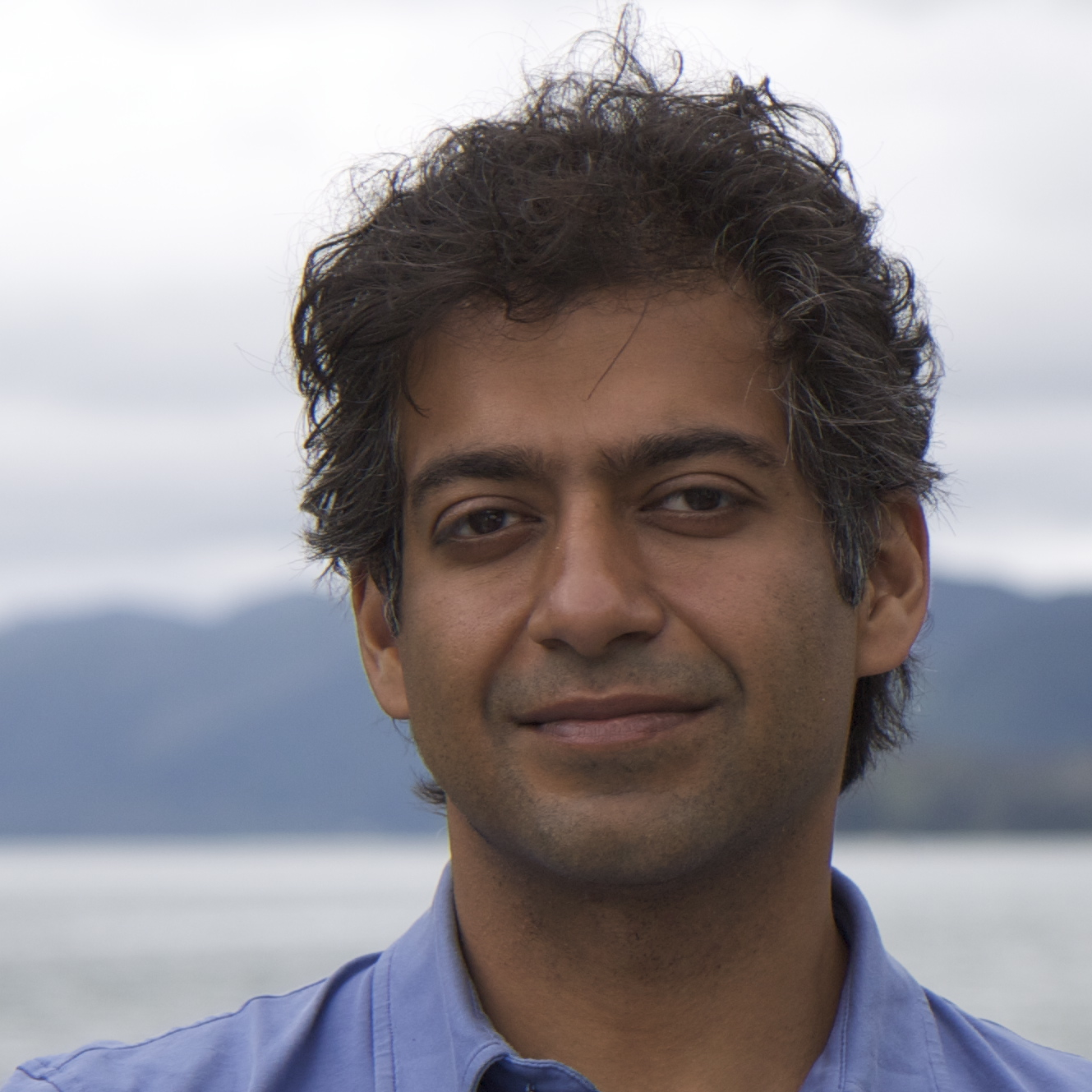
    navalEntrepreneurs Naval Ravikant and Babak Nivi have already done much to reshape the startup investing landscape with AngelList, their now four-year-old networking site that has largely replaced coffee meetings with Internet-based matchmaking. 

    In September, AngelList introduced another game-changer — its Syndicates program, which allows angel investors to syndicate investments themselves, work for which they receive carry. (An angel who syndicates a deal earns 15 percent of any upside, while AngelList collects 5 percent.)

    Though Syndicates is still nascent, I caught up with Ravikant yesterday afternoon to see who has begun using it and how it’s doing generally. Our chat has been edited for length.

    Can you give us a sense of the activity you’re seeing on Syndicates?

    I’d estimate that something like $5 million has moved through the platform already, with several million more dollars [committed but not yet closed]. About 24 deals have closed, and others are in various stages of closing.

    Do the deals involve many of the same people or are you seeing fairly disparate groups?

    A bit of both. Some people are using it more promiscuously to diversify their portfolio. Others are doing deals because the know the lead backer well and it’s a trust relationship. For example, you see [Path CEO and former Facebook exec] Dave Morin and other Facebook alums co-investing together and backing each other.

    Is anyone using the platform who you didn’t anticipate would?

    The biggest surprise has been VC interest. The response has been the highest from angels, but we’re in advanced stages of talking about how to do syndicates with four firms, and numerous others are using the platform as a way to scout out deals. As with their scout programs, they’re backing their portfolio CEOs when those CEOs go and find and fund great companies.

    Will we see a day when a person can raise $20 million via Syndicates to invest across numerous startups?

    The way it’s set up right now, you can [invest] deal by deal…So we’ll hold funds in escrow for one deal. What we’re not doing is [managing a] 10-year commitment. If [Google Ventures partner] Kevin Rose has $2 million in backing, that’s $2 million [for one] deal. But he can drop people, or they can drop out of the syndicate, any time.

    Has Kevin Rose made an investment through the platform yet? 

    There are three Google Ventures partners who have a lot of syndicate backing but haven’t done a deal yet.

    This whole thing seems like a great financial proposition for everyone but you. Is that true?

    The idea isn’t to make money in the short term. But yes, today, it’s a money loser. We take 5 percent of [any upside] so if a lead invests $100,000 personally in a company, then raises another $1 million off Syndicates, we get carry off that $1 million, or $50,000 [if the company sells for $10 million]. But most Syndicates are in the $250,000 or $300,000 to $750,000, so at the lower end, that’s about $10,000 for us. Meanwhile, our out-of-pocket fees – to set up the funds, handle customer accounting [and so forth] are $12,000. So we’re basically paying $12,000 for $10,000 in future profit.

    Why do it then?

    Because longer term, we think we can bring LLC costs down to $5,000. And as syndicate sizes grow, it starts to become marginally profitable.

    In the meantime, are you quietly investing a fund for anyone right now? At one point, you were talking about doing that after you’d invested a $20 million angel fund, Hit Forge.

    I’ve been offered to raise another; [Hit Forge included stakes in] Uber, Twitter and Stack Overflow. But investing is [just a side hobby] now, and I’m making all my investments through Syndicates. I get to follow my best friends into deals, and I don’t mind paying them for carry if it means I don’t have [as many] coffee meetings.

    Sign up for our morning missive, StrictlyVC, featuring all the venture-related news you need to start you day.

  • VCs Want to Know: What Else Have You Got?

    whatchou gotIt’s getting tough out there for entrepreneurs. No longer is it enough to create a sustainable, profitable, fast-growing product that’s beloved by customers.  These days, top VCs are placing a bigger premium on what’s next.

    Andreessen Horowitz is “generally willing to take more risk on a product that hasn’t yet been built,” Marc Andreessen told me last month.

    “We want to be in the most extreme propositions — the sort of thing where it’s either a moonshot or a smoking crater in the ground,” he explained. Toward that end, he’d said, “We’re willing to impute value into [what’s coming next out of a startup] if we’re highly confident that the team can build it and that the market is really going to want it.”

    Ranjith Kumaran has seen this focus on the future vision first-hand. Kumaran, who cofounded the file sharing and online data storage company YouSendIt (renamed Hightail last July), is CEO of PunchTab, a nearly three-year-old loyalty and engagement platform that helps customers like Arby’s Restaurant Group create instant loyalty programs.

    PunchTab’s trajectory has been impressive. In addition to growing revenue five times over last year, it has expanded its enterprise customer base from 10 to more than 40. Nevertheless, Kumaran finds that the VCs with whom he meets care most about Punchtab’s “next-horizon solutions”; they want entrepreneurs to paint a picture.

    “I believe that wasn’t the case before,” he observes. “Series B was about how fast you’re growing and how you get to next revenue [milestones].”

    If VCs are no longer enamored of velocity alone, the shift likely owes to a number of factors, beginning with the fact that fewer venture firms have come to control greater amounts of capital and need bigger returns than ever to justify such pools.

    “It’s a very different dynamic today,” says Brian O’Malley, a general partner at Battery Ventures. “The market has gone from venture people sitting in their office, waiting for whatever company to come and pitch them, to chasing the companies that everyone else wants to invest in. If you’re part of that inner crowd, life is very good and there’s lots of money being thrown at you.”

    But you need some imagination to get there.

    Sign up for our morning missive, StrictlyVC, featuring all the venture-related news you need to start you day.

  • So Snapchat is Worth More than $3 Billion. Got It.

    moneymoneymoneyYesterday, there was lots of back and forth about Snapchat, the fast-growing messaging service, and the $3 billion all-cash offer from Facebook that it recently spurned, according to the Wall Street Journal’s sources. (Apparently, three sources also confirmed this account to the New York Times.)

    As the Journal reported, the “rebuff” came as Snapchat is “being wooed by other investors and potential acquirers. Chinese e-commerce giant Tencent Holdings had offered to lead an investment that would value two-year-old Snapchat at $4 billion.”

    It isn’t that Snapchat’s young founders — Evan Spiegel, 23, and Bobby Murphy, 25 – are strictly opposed to being acquired, suggested the Journal.  But they think if they wait until the next year, they’ll fetch an even richer valuation.

    If they do, they can thank the media for its help.

    I’ve read the numerous reasons why this deal makes sense: Facebook is losing steam with the younger demographic. Its Snapchat competitor, Poke, fell flat. Snapchat’s users access the service via their mobile phones, where Facebook wants to reach more of its own users.

    But there seem to be at least as many reasons why this Facebook deal doesn’t add up.

    For starters, Facebook’s modus operandi is to create a social operating system for the masses. Snapchat’s stated purpose is to prevent sharing. Facebook grows squeamish at the prospect of lactating mothers. One of Snapchat’s more prominent use cases is sexting.

    There’s also the size of the reported offer. With the exception of Facebook’s then $1 billion cash-and-stock acquisition of the photo-sharing service Instagram last spring – a deal that helped Facebook quash a growing threat on the verge of its IPO — Facebook isn’t in the habit of splashing out much on acquisitions.

    Maybe it’s been waiting for a growth opportunity exactly like the one that Snapchat presents, but Facebook knows as well as any that it’s very hard to buy or create a “category killer.” Instagram has grown from 30 million monthly active users to 150 million monthly active users under Facebook, but it’s no YouTube; there are still plenty of competitors out there. The same is true of messaging services. SnapChat may be processing 350 million “snaps” per day, but it doesn’t own its space.

    Which raises yet another point: This deal is expensive.  As far we know, Snapchat has no revenue or business model. We’re not even sure how many users it has. (It last reported 5 million users in April; according to the Guardian’s calculations, it probably has around 26 million U.S. users today.)

    Even if Snapchat is worth top dollar right now, Facebook has current assets of $10.5 billion. Paying $3 billion in cash would significantly deplete its balance sheet. Observers have likened yesterday’s news to Google’s reported bid to buy Groupon. But with Google’s many tens of billions of dollars in cash, it could have easily afforded to gamble on Groupon; not so with Facebook and Snapchat.

    As a reporter, I love acquisitions: they’re exciting, and they often involve very personal stories. Where the rubber meets the road, though, most acquisitions fail. This deal may have been in the cards at one point. But if I were Facebook, I might be happy it didn’t go through.

  • I Listened to the Winklevii So You Don’t Have To

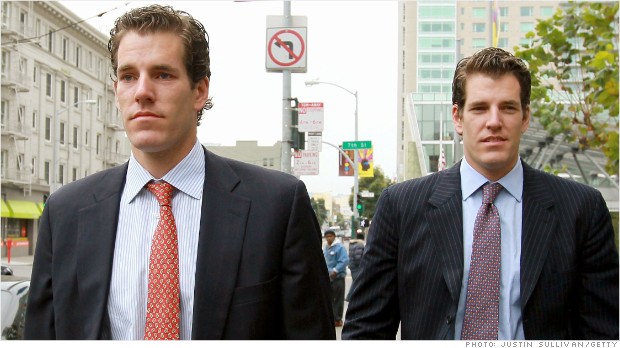
    130916130417-winklevoss-twins-620xaYesterday, at the New York Times’ annual Dealbook conference, financial columnist Andrew Ross Sorkin sat down with Cameron and Tyler Winklevoss, who long ago moved on from their battle with Facebook to become enthusiastic backers of the digital currency bitcoin.  

    Little wonder: The twins began buying bitcoins at $9 apiece in the summer of 2012.  As of April, the value of bitcoins had shot to $120, making their investment worth $11 million. Fast forward to today, when bitcoins are trading at around $385 each, and you begin to appreciate the brothers’ fondness for this latest, financial phenomenon. Indeed, the twins – who hope securities regulators will let them move forward with an exchange-traded fund that would hold only bitcoins – say that they now believe bitcoins could enjoy up to a $500 billion market cap.

    At the outset of yesterday’s interview, Sorkin offered that he’s still “perplexed” by bitcoin. Because a few of you might be, too, it seemed worth sharing some of the brothers’ insights.

    * Speaking about the history of bitcoin, Cameron Winklevoss recalled the story of pseudonymous programmer Satoshi Nakamoto, who in 2009 released the source code of bitcoin to the world. “Effectively, it [created] a digital currency with a fixed set of bitcoins at 21 million that’s divisible out to eight decimal points,” he said. In an effort to simplify his point, Winklevoss added that there’s no reason to be concerned by the apparently limited supply of bitcoin, as it’s “divisible out to a large, large amount.”

    * On how bitcoins are digitally “mined,” Cameron Winklevoss noted that while an individual could, theoretically, mine a bitcoin, there are “a lot of mining outfits that are building huge data centers and computers with applications that are specifically built toward trying to mint bitcoins.” (Put another way, he suggests leaving the mining to the professionals.)

    * On how they got into bitcoin investing, Tyler Winkelvoss said the brothers were on vacation in Ibiza (of course), when a friend of a friend suggested they look into the digital currency. They followed up and soon realized it was a “pretty incredible invention.” (I was hoping for more from this anecdote, but there you have it.)

    * On why bitcoin might be used to transfer money, rather than good old-fashioned dollars, Tyler Winklevoss compared the technology to email. “Bitcoin is a protocol, and just like [email protocols]…allow you to send an email free and instantly, you can now send money from [the U.S.] to anywhere for free, as opposed to wiring money through Western Union [and] paying a 10 percent clip, or going through banking systems that take maybe three to five days. The old legacy rails of the banking system…are slow, inefficient, and costly. So the promise of bitcoin is to bring technology to financial services like it did for email…”

    * On regulation around bitcoin — or the lack thereof — Cameron Winklevoss said, “That’s the point. It’s based on your trust in math and cryptography. It’s not based on trust in an individual, or the back-room dealings of, let’s say, the Federal Reserve… This is an open-source code; everyone knows what’s going on. The rules are set in stone.”

    * On whether bitcoin features an anti-government strain, Tyler Winklevoss acknowledged that there is “definitely a libertarian strain [of individuals] that gravitates toward this, [along with] certain economic schools of thought…But it’s more a response to a financial system that’s frankly very buggy. I don’t think it’s a bet against the dollar,” he said. “I think it’s a healthy check and balance that makes it better.”

    * Asked about concerns that bitcoin isn’t traceable and therefore likely to be used for illicit purposes, both twins smiled. (They’d been waiting for this softball.) Tyler Winklevoss quickly noted that “you can’t track cash,” either.

    * On what happens if U.S. regulators determine that bitcoin is too risky, Cameron Winklevoss suggested that the U.S. will be left behind if they do. China, he noted, “has implicitly given its blessing to bitcoin,” including by allowing Chinese search engine Baidu to accept it as a form of payment. He also noted that bitcoin has been declared “legal, private money” in Germany and that other countries, including Belgium, see “no problem with it. Said Winklevoss, “If there’s a scenario where bitcoin is regulated out of existence in the U.S., I think bitcoin continues to thrive in other places in the world.”

    Photo courtesy of CNN.

    Sign up for our morning missive, StrictlyVC, featuring all the venture-related news you need to start you day.

  • Diagnosing What’s Wrong, With Your Smartphone

    scanadu-scoutLast week, Slate reported on a brilliant UCLA professor who is “changing the field of medical testing by turning smartphones into portable laboratories.”  But there are a growing number of entrepreneurs finding ways to transform our phones into diagnostic tools. Among the latest is Walter de Brouwer, the founder of Scanadu, a three-year-old, Mountain View, Calif.-based company that just raised $10.5 million in Series A funding led by the firm Relay Ventures. (Tony Hsieh’s VegasTechFund, Jerry Yang’s Ame Cloud Ventures, and numerous angels also participated.) 

    Right now, Scanadu makes a puck-shaped scanner that’s packed with sensors designed to read your vital signs — including heart rate, blood pressure, temperature, and blood oxygen levels — and beam the information wirelessly to your iOS or Android smartphone. Next, the company plans to produce a disposable urine analysis testing platform to help determine, say, whether you’re developing heart-related kidney problems. 

    Yesterday, I chatted with de Brouwer — a serial entrepreneur and former academic — about his company’s next steps.

    What’s the big idea here?

    We want to bring [to consumers] the complete diagnostic experience of a hospital. That consists of the emergency room, which basically measures the electromechanical information on the surface of the body; imaging, or what you see through the skin; and labs, where bodily fluids — blood, urine analysis, saliva — are examined.

    One day, this will come together in a way that’s FDA approved, so that patients have accurate information that both they and their doctors accept and understand.

    You don’t yet have FDA approval. How long do you anticipate it will take?

    We’re starting our first clinical trials with [the] Scripps [Translational Science Institute] and will deliver a feasibility study to the FDA in March. Normally, [the turnaround takes] 100 days, though you can never predict, especially if there are more questions, and you have to do more trials. So our hope is to have the product out to consumers for the holidays in 2014, but our expectation is that [it will be available for sale] in 2015.

    Will you try to sell to both Western and developing countries?

    Because we’re small – we have 19 employees right now – we’re targeting the U.S. market for the moment.

    Who will have access to your customers’ data?

    Users will basically own their data, which they can send to their doctor to view, even in real time.

    In summer, you raised a separate $1.6 million for Scandu in a record-breaking Indiegogo campaign, during which pre-order prices rose from $149 to $199. What are you planning to charge for your firs product?

    The app will be free. But $199 is what we found consumers are willing to pay [for the device]. Over time, they can expect to pay less. The first digital thermometers cost $950.

    Sign up for our morning missive, StrictlyVC, featuring all the venture-related news you need to start you day.

  • AppNexus on Ad Tech IPOs, and Why It’s Not Yet Public

    MichaelRubenstein_SiteNew York-based AppNexus has been having a very good run. The six-year-old ad platform, which oversees the real-time buying and selling of online display advertising, has grown to 600 employees. The company, which had nine offices at the start of the year, has since opened two others. And so many billions of ads are being processed on AppNexus’s platform each day that it’s now the “largest [ad tech] company outside of Google,” says AppNexus President Michael Rubenstein. 

    So when is AppNexus going to follow in the footsteps of other ad tech companies to go public? On Friday, I asked Rubenstein, who was director of Google Ad Exchange before joining AppNexus in 2009 (and who spent a decade at DoubleClick before that). Our conversation has been edited for length. 

    When we last talked much earlier this year, you’d just closed on $75 million in funding. What are some of the highlights since?

    It’s been an amazing growth year. We’ve just about doubled our revenue [since 2012]. We decided to accelerate our international expansion and just recently opened offices and a data center in Sydney and Singapore. The other major investment we’ve made this year was mobile. Because it’s such an explosive trend in the digital media industry, we dedicated a team of dozens of people inside the company to building the best mobile ad technology in the world based on our existing capabilities.

    You recently partnered with the mobile ad network Millennial Media. Why do you think its stock hasn’t performed better?

    They went public at a very high valuation and the stock has come down a lot since then, but I’m not an expert on [why]. What’s clear is that Millennial is building a leading business in what’s likely to be the fastest-growing and most exciting area of the ad market for a long time to come.

    Any thoughts on why another ad tech company, the automated ad buying startup Rocket Fuel, has received a warmer reception by public investors? 

    Rocket Fuel is doing a really great job of serving its customers and building a very strong ad business. Whether that means its stock price is justified or over- or undervalued, it’s hard to say with valuations all over the place.

    Why are ad tech valuations so seemingly schizophrenic?

    I don’t know if the market really knows how to value these businesses. It could be the market is trying to sort out which are the great companies and which aren’t.

    Can you share anything about your revenue and whether or not you’ve ever been profitable? The standard for going public still seems to be revenue of more than $100 million.

    We’ll do significantly more than that [in 2013]. We’re not profitable because we continue to invest very heavily in the long term. We’ve invested massively in mobile advertising and had very little revenue from [it], for example, but that will change next year. And by 2017, the [Internet Advertising Bureau] is forecasting that mobile advertising will [represent a slight majority of U.S. online ad spending].

    It is safe to say you’re thinking about an IPO?

    We had some thoughts about it and decided to do that big round at the beginning of the year instead because we felt like we’d be best off building value rather than going public. An IPO is something that we’d like to do in the future, but it would be more of a financing event than anything else.

    Will we see AppNexus make an acquisition any time soon?

    We always look. But acquisitions are a big deal, and, having been involved in a number at DoubleClick and Google, I can tell you that an acquisition can be a terrific catalyst for growth if done right. But often, they are not done right. So you have to pick your pitch.

    Sign up for our morning missive, StrictlyVC, featuring all the venture-related news you need to start you day.

  • The FAA Shows Drone Companies a Way Forward

    home-feature-01-1-w940h360Yesterday, the Federal Aviation Administration released its first “roadmap” for allowing unmanned aerial vehicles (UAVs) access to U.S. national airspace beginning in 2015. The idea is to permit some drone activity while preserving enough flexibility for the FAA to adjust its rules and regulations if it needs to.

    The step was a welcome one for entrepreneurs who are working on flying robots for the military — whose airspace isn’t regulated by the FAA — but who will soon be able to sell to a variety of commercial industries, including agriculture, construction, oil, gas, and mining.

    “There’s a light at the end of the tunnel now,” says Bilal Zuberi, a Palo Alto-based partner at Lux Capital, who sees a whole new industry about to emerge — with droids as just the starting point. He likens the moment to “when the satellites first went into space and data became available. You could do so much more with it than people imagined.”

    Think maps that update in real-time or sophisticated applications that notify farmers when crops have been afflicted with specific diseases.

    “Right now, people are thinking about just the hardware,” notes Zuberi, “but the hardware will lead to huge software opportunities downstream.”

    CyPhy Works is one example of a startup that is building UAV hardware but betting on a future in software. The Boston-based company —  which announced $7 million in fresh funding this week led by Lux Capital — makes a 3-pound flying robot and a larger, 12-pound model that are both tethered to portable command stations but can float up to 500 feet off the ground and hang there for hours while beaming down high-definition video.

    The company’s primary customer right now is the U.S. military, which is using the drones at combat outposts to monitor compounds and facilities, among other things. (The drones can accept a variety of payloads, from three-dimensional scanners to sensors for chemical detection.)

    CyPhy founder Helen Greiner —  who earlier cofounded iRobot, which remains best known for its Roomba vacuum cleaners – sees a huge software opportunity coming when UAVs are permitted to share the skies with civilian aircraft.

    “It’s a good time to be developing commercial applications, which we view as any opportunity to help manage a project using a bird’s eye view, whether it’s monitoring a bridge being built, a pit being dug, or a facility to see what people are doing,” she says.

    Part of that process will involve convincing customers that they need satellites of flying cameras to replace their stationary cameras. But Greiner wants to be able to provide them with automatic detection and imagery analysis, too.

    I ask Greiner about the privacy concerns that have been holding up the FAA. What about people buying UAVs to spy on their neighbors? “I share that [privacy] concern,” she says. “I don’t want one outside my house. But that’s not what we’re building here.”

    What of the competition? After all, according to the FAA, there could be at least 7,500 commercial drones in use within five years.

    Greiner suggests she isn’t concerned with what others are doing. She tells me about the top engineers she has hired from iRobot and other UAV companies. Grenier also talks about her passion for her work. “I’ve wanted to build robots since I was 11…it’s exciting stuff to be doing.”

    Most crucially, she notes, no one is leading the pack at this early date. “It’s still very early in the game.”

    Picture courtesy of CyPhy Works.

    Sign up for our morning missive, StrictlyVC, featuring all the venture-related news you need to start you day.
     

  • To Save Other Startups, Exitround Has to First Prove Itself

    exit-round1Many thousands of companies have been funded in recent years, and most of them will fail. Exitround, a San Francisco-based startup, hopes it can find buyers to snap them up.

    Exitround was founded about a year ago by Jacob Mullins, who was working at the time as a senior associate at Shasta Ventures. (He left the firm this summer.) “We’d see really smart entrepreneurs with great ideas and great products who potentially wouldn’t be able to get that next round of funding but that would be interesting to a Facebook or Twitter; I started thinking there was more of a marketplace [opportunity] here.”

    One can see why. Just yesterday, the outlet The Verge lavished several thousand words on the failure of Everpix, a startup that helped users easily store and organize their photos. Everpix’s founders include a French entrepreneur who sold his first company to Apple a decade ago. Beyond the founders’ pedigree, the team had also raised seed funding from some top-notch VCs, including Index Ventures. Exitround would seem a great alternative to shutting down completely, as Everpix was abruptly forced to do.

    Here’s how it works: Exitround makes introductions between startup teams and corporate development types. It also provides plenty of anonymity to startups seeking buyers. Exitround supplies buyers with a rough sketch of a startup’s offering. If a buyer expresses interest, Exitround checks with the founding team before providing more information or setting up a meeting. For its matchmaking, Exitround charges a recruiting fee of between $10,000 and $20,000 per hire.

    So far, Exitround has convinced more than 500 buyers to sign on to the platform, Mullins tells me. Among them, he says, are “growing startups with super-aggressive growth goals,” big tech names that are known to be serial acquirers, and “legacy companies, including in manufacturing, insurance, healthcare and hospitality. These are companies that, while their core business may not be tech, realize that they need to deliver a better customer experience.” He also says Exitround has attracted “hundreds” of startups to its platform.

    Still, not everyone is convinced that M&A can be automated. One corporate development executive privately tells me his company’s experience “acquiring and integrating companies has been very difficult,” adding that using a middleman like Exitround would “just be adding on another layer of complication.”

    Scott Rafer, a serial entrepreneur who has been in acqui-hire situations numerous times, also sees problems with Exitround’s model. First, he notes that the “likelier buyers know everyone in their sector … if there’s any IP value at all.” Also, he questions Exitround’s ability to keep its deals completely anonymous. “If a company is described [to a potential acquirer] in any way that’s useful, three minutes on Google, and any decent corp dev guy can figure out who it is.”

    Such issues may explain why Exitround is a bit cagey about its progress. Although the company announced its first “exit” in July, Mullins tells me he can’t release any transaction details. Similarly, he says Exitround has “sold some [startups] subsequently,” but he doesn’t disclose how many or any other details about these deals. Mullins also isn’t revealing how much capital has Exitround garnered to test out its business. (He says the company has raised seed funding but that the round remains open, with Exitround hoping to bring aboard “a few other investors strategic to our business.”)

    Either way, a veteran who has been shutting down companies for decades – Martin Pichinson of Sherwood Partners – thinks there’s plenty of room for a company like Exitround in today’s market.

    “I think this is a fantastic idea,” says Pichinson. “It’s hard for corp dev people and others to always and easily have quick and easy access to new technologies, ideas and know-how. We are in an exciting new world, and anything that can expedite adoption is a total win.”

  • Elon Musk: People Need “Things That Are Inspiring”

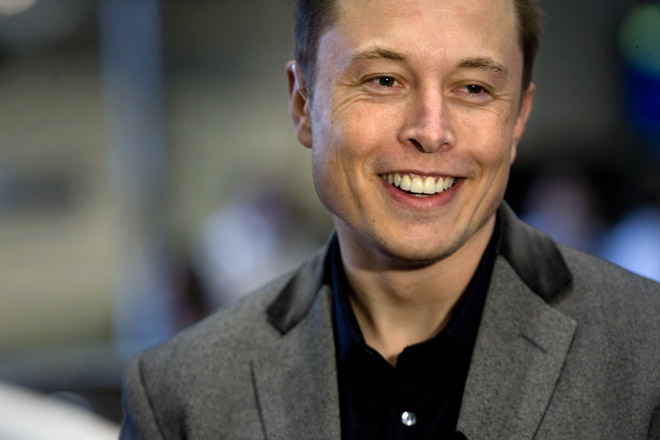
    Elon MuskThis week, the Web Summit conference in Ireland managed to attract some very big names, including Tesla and SpaceX CEO Elon Musk, who was interviewed yesterday as part of the event’s closing ceremonies.

    The billionaire entrepreneur wasn’t alone on stage; venture capitalist Shervin Pishevar was among the guests. But Musk was clearly the main attraction. (As a leather-clad Musk strode to his seat, the James Bond theme resounded throughout the hall, and every smartphone in the audience shot up into the air to take pictures.) Here’s some of what Musk had to say during the panel, which was moderated by Storyful founder and CEO Mark Little:

    On whether it’s a “great time to be alive as a creator”:

    “I don’t think you could ask for a better time in history. I think people sometimes forget that. Realistically, when else would you want to be alive?”

    On why, while running two billion-dollar companies, he would bother to fly to Ireland for Web Summit:  

    “I understand there’s going to be a great party tonight,” said Musk (convincingly).

    Asked about his “lightbulb moment” as a teenager: 

    “It was more like when I was 21,” said Musk. “When I was a teenager, I didn’t really know what I was going to do. I liked playing video games and I liked writing software. So I thought maybe I’ll write [software professionally]; that seemed like a pretty fun thing. And then when I was in college, I started thinking about, ‘Well, what’s going to most affect the world?’ Actually, I thought there were five things that would most affect the world, three of which I thought would definitely be positive things to solve, two of which [were] a slight question mark. As it happens, I was able to get involved in all three of those things: the Internet, sustainable energy, and space.” [Alas, Little didn’t ask about the two other things.]

    On why Musk didn’t simply start another e-commerce company after co-founding PayPal: 

    “The thing that motivated me there was I kept expecting that there would be a manned mission to Mars. That was the continuation of the dream of Apollo. We went to the moon. Then there was supposed to be a base on the moon; there were supposed to be space hotels. There were going to be missions to Mars. And year after year, that stuff didn’t happen. At first, I thought [that] maybe people [had] lost the will to do that, and I came up with the idea of this mission to Mars to kind of get people excited about that stuff again. But I came to the conclusion that I was actually wrong about that assumption, and there’s plenty of will. But it’s really about making sure there’s a way. If people think there’s a way to do it without bankrupting the economy, I think there’s plenty of will.”

    On all the attention he receives versus SpaceX: 

    “We’ve got an awesome team at SpaceX. There’s way too much attention paid to me, and that’s not right. People want to identify with an individual, and so that’s naturally what occurs, but there’s a super-talented group at SpaceX who make it happen.”

    Musk was also asked about his vision for the future of humanity and space exploration in particular:

    “I think it would be really great to have a base on Mars, and ultimately to be making steady progress towards making it a self-sustaining civilization on Mars. I think that’s the most powerful thing we can do to ensure the long term survival of civilization. And it’s just a very exciting future, I think, if you imagine a future where we’re exploring the stars, and we’re a multi-planet species, and the scope and scale of society is that much greater.

    “I find that view of the future really exciting and inspiring, and there need to be things that are inspiring. There are lots of problems on Earth, and there always will be, but there need to be things that are inspiring, that make you want to get out of bed in the morning. Having a bright future in space is one of those things.”

    [By the way, for European readers eager to get their hands on a Model S sedan, Musk said Tesla “should have the right-hand version in production in March” and he estimated that the car will be available to purchase by “late March [or] April.”]

    Sign up for our morning missive, StrictlyVC, featuring all the venture-related news you need to start you day.

  • Venture Heavyweights Sit Back as Deal Sizes Soar

    Hanging Boxing GlovesIt’s been a banner week for a number of Internet companies.

    Last Wednesday, social network Pinterest acknowledged closing on a $225 million round that valued the company at $3.8 billion. Shortly thereafter, AllThingsD reported that Snapchat, the messaging app, is now weighing a $200 million investment round that would value the company at $3.5 billion. And just yesterday, NextDoor, a social network for neighbors, raised $60 million in fresh capital.

    But the reality is that some of today’s biggest venture heavyweights have pulled back dramatically on late-stage deals.

    Two weeks ago, during a visit to Andreessen Horowitz, Marc Andreessen told me his firm has “done almost no growth investments in the last year and a half.”

    Yesterday, Ravi Viswanathan, who co-heads New Enterprise Associates’ Technology Venture Growth Equity effort, told me much the same. “If you chart our growth equity investing over the last few years, it’s been very lumpy,” said Viswanathan. “Last year, I think we did four or five growth deals. This year, I don’t think we did any.”

    That’s saying something for a firm that is right now investing a $2.6 billion fund that it raised just a year ago.

    Andreessen attributes his firm’s reluctance to chase big deals to an influx of “hot money.” The partnership is “way behind on growth [as an allocation of our third fund],” Andreessen told me, “and that’s after being way ahead on growth in 2010 and 2011, because so many investors have come in crossed over into late stage and a lot of hedge funds have crossed over, which is traditionally a sign of hot times, hot money.” He added, “What we’re trying to do is be patient. We have plenty of firepower. We’re just going to let the hot money do the high valuation things while it’s in the market. We’ll effectively sell into that.”

    That’s not to say later-stage deals don’t have their champions right now. At this week’s TechCrunch Disrupt conference, venture capitalist Bill Gurley of Benchmark told the outlet that “a global reality is that some of these companies have systems, they have networks in them, that cause early leads to always play out with really huge platforms.” People “laugh or write silly articles about the notion of a pre-revenue company having a very high valuation,” added Gurley.  But “if you talk to some of the smartest investors on Wall Street, or go talk to guys like Lee Fixel or Scott Shleifer at Tiger, they’re looking for these types of things. They’re looking for things that can become really, really big.”

    Still, Viswanathan’s concerns sound very similar to Andreessen’s when I ask him why NEA has pulled back so markedly from later stage investments.

    “It’s an amazing tech IPO market, and that drives growth,” Viswanathan observed. “But I’d say the growth deals we saw last year [were] elite companies getting high valuations. There are still great opportunities out there. But right now, it feels like there are high valuations even for the lesser-quality companies.”

    Photo courtesy of Corbis.

    Sign up for our morning missive, StrictlyVC, featuring all the venture-related news you need to start you day.

StrictlyVC on Twitter