• Marc Andreessen: We’ve “Kicked Around” Doing a Hedge Fund, Too

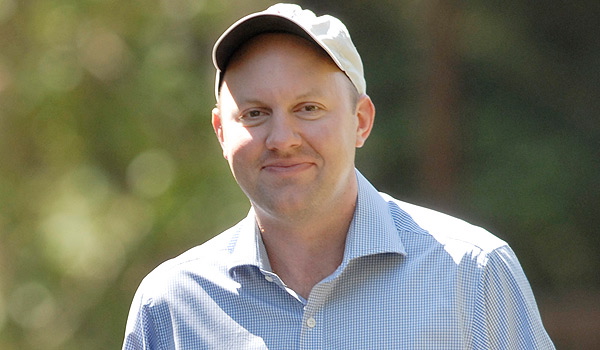
    marc-andreessenThis week, I headed to Sand Hill Road to sit down with venture capitalist Marc Andreessen of Andreessen Horowitz, who is expert in keeping the media on its toes. His willingness to engage with the press – which has probably generated more public interest in venture capital than ever existed previously – is meant to crush the competition. As he told me years ago in a separate sit-down, “We like counter-programming. If there are three networks showing cop drama shows on Thursday at 9 pm, then what you want to do is put on a comedy.”

    Next week, I’ll feature excerpts from our hour-long chat in which Andreessen touched on other ways Andreessen Horowitz is trying to out-innovate its venture peers, so be sure to tune in. In the meantime, here are two quick snippets from our conversation. In the first, Andreessen and I chat briefly about Twitter, a company that will make Andreessen money both personally and professionally. (Andreessen was among Twitter’s earliest individual investors, participating in the company’s $5 million Series A. As a firm, Andreessen Horowitz elbowed its way into Twitter in early 2011 by purchasing $80 million worth of secondary shares; Twitter was valued at roughly $3.7 billion at the time.)

    Andreessen Horowitz prides itself on being fairly transparent. Yet you’ve tweeted twice – once, more than six years ago, to write “Twittering,” and about three years later to add, “I’m back – did anything happen while I was gone?” Why don’t you use it?

    [Laughs.] I don’t know that I even have a good reason for it. I was a very active blogger at one point. I’m actually very active on Hacker News. I was very active on Quora for a while. So I just kind of bounce around, do different things.

    At this point, at this firm, it’s more interesting for the other people to become more well-known, rather than me becoming more well-known. So it’s not a big priority for me to elevate my own brand. Plus, I’ve always thought it’s kind of funny.

    Funny in what way?

    [Laughs.] I don’t know. It’s just really funny. I was one of the first investors. And then I tweeted. And then I didn’t tweet. [And 900 days later], I tweeted again.

    You have something like 18,000 people following you, waiting for your next tweet.

    18,000 people. Two tweets. [Laughs again.] It’s just kind of funny.

    In this next snippet, Andreessen shares that his firm has more recently contemplated starting a hedge fund.

    You’re managing $2.7 billion at this point, but it’s been a couple of years since you raised your last fund. Will we see a new fund in 2014, and might we see a $2 billion or $3 billion fund?

    [We’ll probably raise a new fund] next year. [As for that range], I don’t think so. We’ve kicked around a couple of ideas. We’ve kicked around doing something on the public side like a hedge fund, but we’re not going to do it.

    Why contemplate it?

    First of all, there are public companies we greatly admire…that we feel are undervalued or misunderstood. Also, in the venture fund, we’re trying to go long in the future, and so the other side of that would be to go short in the past, or to short the people who are not long in the future. So if we’re doing e-commerce in a category and think there’s a retailer that will suffer as a consequence of e-commerce becoming bigger, there’s another trade you could do on the hedge fund side if you’re private.

    But…

    There are two really big issues with a firm like ours doing anything public. One, we think the insider trading risk is just off the charts. I saw that Mark Cuban just got off for the Mamma.com trade, and I’m very happy for him, but it’s a good illustration of how dangerous an environment it is for people who are kind of in the middle of things to take stock positions right now. There are just tons of prosecutions – the whole SEC thing – there’s just tons of scrutiny.

    The other issue is we have this whole corporate briefing program, where you have 1,200 management teams from big companies coming through here every year and we run these big conferences. We just held our big CIO/CMO conference last week, with 150 top CIOs [and] CMOs, and it’s an amazing program and they’re really open with us about what their challenges are and what they’re working on and trying to do, and so, if we started to short their stocks…[laughs]…right? We’d basically blow that program up. So we decided we can’t do a hedge fund.

    Sign up for our morning missive, StrictlyVC, featuring all the venture-related news you need to start you day.

  • Can an ‘Airbnb’ of Outdoor Gear Take Off?

    spinlister (1)Everyone wants to be the Airbnb of something. Spinlister is among them. Launched with much fanfare last year as a bike-sharing marketplace, the platform failed to gain traction, its owners ultimately deciding to sell the business to one of their earliest investors, Brazilian businessman Marcelo Loureiro. Despite Spinlister’s lack of momentum, Loureiro isn’t fundamentally altering the business. Instead, he shut it down and relaunched it with an eye towards renting many more types of outdoor equipment. And he recently raised a $1.65 million seed round from friends and family to help the process along.

    The question remains whether enough people want to rent their outdoor goods. Yesterday, I chatted briefly with Loureiro about why they should, and what he hopes to do about it.

    Your business seems very hard to scale. Is that fair?

    We need to connect with the right audiences first. Originally, we were just connecting with the tech community, and a lot of bikes got listed, but not a lot of users joined. Now, we’re targeting more hard-core cyclists, and while we’re not seeing exponential growth, it’s solid and constant.

    When are you broadening out Spinlister’s offerings?

    In mid-December, when we have enough inventory, we’re planning on opening up the platform for other sports equipment, starting with skis and snowboards. Afterwards, we’ll add skateboards and surfboards and camping gear and kayaks — anything you have in your garage that you aren’t using. A lot of cyclists have snowboards or skis, and a lot of snowboarders have bikes, but we weren’t talking to them. There’s a whole community that’s just sitting on gear and we’re now very focused on creating awareness [within that community].

    People rent their bikes for $20 a day on average. How much of that fee do you collect?

    I take 30 percent: 12.5 percent on the renter’s side as a service fee as 17.5 percent as a lister’s fee. It sounds like a lot, but it’s what we need right now to keep the lights on. We do have people making [real] money renting bikes. If you have a good bike or bikes in a good location, you’re going to get the business.

    Where are you seeing the most traction? 

    We have bikes listed all over the world. But right now, we have the most inventory in San Francisco and New York, with 350 bikes in New York and 500 bikes in SF.

    Is that more or fewer bikes than people are trying to rent in those cities?

    We have more demand than supply. My fulfillment [rate] is around 35 to 40 percent of requests because I don’t have the inventory, or sometimes the bike’s owner isn’t available in time or the bike is broken.

    Other complicating factors must include drop-off and pick-up, along with theft, despite that you cover damages. Why are you so convinced of this model?

    Access trumps ownership; it’s where things are headed. You used to own CDs; now you access Spotify whenever you want. I think similarly, people will access, versus own, their gear. I talked recently with [big wave surfer] Laird Hamilton, and he [suggested that with Spinlister] everyone who lives by the beach who has a few boards can have a business without having a shop. It’s the same with people who own multiple bikes.

    Down the road, there are lots of opportunities to [capitalize] on the knowledge we’re amassing about what kind of equipment people like to use. That kind of data could be very valuable to brands, for example, who could also test new gear within the platform.

    It’s early. This year has been about building and fixing a lot of stuff; in 2014, we go after the users.

    Sign up for our morning missive, StrictlyVC, featuring all the venture-related news you need to start you day.

  • StrictlyVC: October 17, 2013

    110611_2084620_176987_imageGood morning! Happy Thursday, and wow, congratulations to Emergence Capital, which saw an early, $4 million invested into the enterprise software company Veeva transformed into well north of $1 billion yesterday. More details below in IPO news.

    Top News in the A.M.

    The government finally reopens. “”Good morning folks, thank you for your service,’ called out Agriculture Secretary Tom Volsack, as no-longer-furloughed civil servants streamed from the nearby Smithsonian Metro station through the doors of agency headquarters.”
    —–

    Can an ‘Airbnb’ of Outdoor Gear Work? 

    Everyone wants to be the Airbnb of something. Spinlister is among them. Launched with much fanfare last year as a bike-sharing marketplace, the platform failed to gain traction, its owners ultimately deciding to sell the business to one of their earliest investors, Brazilian businessman Marcelo Loureiro. Despite Spinlister’s lack of momentum, Loureiro isn’t fundamentally altering the business. Instead, he shut it down and relaunched it with an eye towards renting many more types of outdoor equipment. And he recently raised a $1.65 million seed round from friends and family to help the process along.

    The question remains whether enough people want to rent their outdoor goods. Yesterday, I chatted briefly with Loureiro about why they should, and what he hopes to do about it.

    Your business seems very hard to scale. Is that fair?

    We need to connect with the right audiences first. Originally, we were just connecting with the tech community, and a lot of bikes got listed, but not a lot of users joined. Now, we’re targeting more hard-core cyclists, and while we’re not seeing exponential growth, it’s solid and constant.

    When are you broadening out Spinlister’s offerings?

    In mid-December, when we have enough inventory, we’re planning on opening up the platform for other sports equipment, starting with skis and snowboards. Afterwards, we’ll add skateboards and surfboards and camping gear and kayaks — anything you have in your garage that you aren’t using. A lot of cyclists have snowboards or skis, and a lot of snowboarders have bikes, but we weren’t talking to them. There’s a whole community that’s just sitting on gear and we’re now very focused on creating awareness [within that community].

    People rent their bikes for $20 a day on average. How much of that fee do you collect?

    I take 30 percent: 12.5 percent on the renter’s side as a service fee as 17.5 percent as a lister’s fee. It sounds like a lot, but it’s what we need right now to keep the lights on. We do have people making [real] money renting bikes. If you have a good bike or bikes in a good location, you’re going to get the business.

    Where are you seeing the most traction? 

    We have bikes listed all over the world. But right now, we have the most inventory in San Francisco and New York, with 350 bikes in New York and 500 bikes in SF.

    Is that more or fewer bikes than people are trying to rent in those cities?

    We have more demand than supply. My fulfillment [rate] is around 35 to 40 percent of requests because I don’t have the inventory, or sometimes the bike’s owner isn’t available in time or the bike is broken.

    Other complicating factors must include drop-off and pick-up, along with theft, (despite that you cover damages). Why are you so convinced in this model?

    Access trumps ownership; it’s where things are headed. You used to own CDs; now you access Spotify whenever you want. I think similarly, people will access, versus own, their gear. I talked recently with [big wave surfer] Laird Hamilton, and he [suggested that with Spinlister] everyone who lives by the beach who has a few boards can have a business without having a shop. It’s the same with people who own multiple bikes.

    Down the road, there are lots of opportunities to [capitalize] on the knowledge we’re amassing about what kind of equipment people like to use. That kind of data could be very valuable to brands, for example, who could also test new gear within the platform.

    It’s early. This year has been about building and fixing a lot of stuff; in 2014, we go after the users.

    ContentCtrlBanner_250x300

    New Fundings

    AppLife, a year-old, Berlin-based, mobile games marketing platform, has raised $7 million from existing investor Prime Ventures. The company has raised $20 million altogether from Prime.

    Boxer, a year-old, Austin, Tex.-based email management system, has raised $3 million in funding led by Sutter Hill Ventures.

    G1 Therapeutics, a five-year-old, Chapel Hill, N.C.-based pharmaceutical company that’s largely focused on cancer therapies, has raised a $12.5 million Series A round led by MedImmune VenturesHatteras Venture Partners and Mountain Group Capital also participated in the funding.

    Kii, a provider of tools for mobile developers, has closed on $7.3 million in funding from Fenox Venture Capital and other investors. The company, which has offices in San Francisco and Tokyo, was formed in 2010 through the merger of Servo Software and Synclore Corp., companies that were focused on mobile data synchronization and backup.

    Mapbox, a three-year-old, Washington, D.C., has raised $10 million in Series A funding from Foundry Group. The company’s cloud-based map platform allows users like designers and news outlets to create and share interactive Web maps.

    Mintingo, a four-year-old, San Mateo, Calif.-based marketing intelligence company, has raised $10 million in Series C funding led by Adams Street PartnersSequoia Capital and Giza Venture Capital, which led Mintigo’s $9 billion round, also participated.

    Sage Therapeutics, a two-year-old, Boston-based company that’s developing medicines for central nervous system disorders, has raised $20 million in Series B financing from investors ARCH Venture Partners and Third Rock Ventures. To date, the company has raised $57.8 million.

    Stitch Fix, a 3.5-year-old, San Francisco-based online shopping platform, has raised $12 billion in Series B funding from Benchmark Capital. The round brings the company’s total funding to date to $16.8 million. Earlier investors include Baseline VenturesLightspeed Ventures Partners, and Western Technology Investment.

    Usermind, a new, Seattle-based startup whose software aims to make business operations people more productive, has raised a $7.6 million led by Andreessen Horowitz, which was joined by Charles River Ventures and SV Angel. (Vator News has much more here.)

    —–

    New Funds

    5AM Ventures, a 12-year-old, San Francisco-based seed and early-stage venture capital firm focused life science companies, is looking to raise a fourth, $240 million fund, according to an SEC filing. The Form D says the firm has yet to begin fundraising; it lists the firm’s three managing directors: John Diekman, Scott Rocklage, and Andy Schwab.

    Camden Partners, an 18-year-old, Baltimore based firm that specializes in growth capital opportunities, is raising its fifth fund, according to an SEC filing. The first sale has yet to occur, according to the firm; no target is listed.

    Javelin Venture Partners, a four-year-old, San Francisco-based early-stage venture firm, has raised $125 million for its third fund. It also promoted principal Alex Gurevich to partner. Javelin had raised $105 million for its most recent fund in 2011.

    SoftTech VC is raising a fourth, $85 million, fund, according to an SEC filing, which says the first sale has yet to occur. The firm, founded by Jeff Clavier, raised a $55 million third fund in January 2012. Clavier alone is listed on the filing.

    —–

    Exits

    SMS Masterminds, a small, San Luis Obispo, Calif., loyalty marketing business, is being acquired by SpendSmart Payments Company, a Des Moines-based prepaid payments services company. Terms of the deal aren’t being disclosed.

    —–

    IPOs

    Veeva Systems, a 6.5-year-old, Pleasanton, Calif.-based maker of CRM software for life sciences companies, went public yesterday, selling more than 13 million shares at an offering price of $20 per share. The stock soared throughout the day, closing at $37.16, up 85.8%. The company’s biggest institutional backer is Emergence Capital Partners, which owns 31 percent of the company, according to SEC filings. Emergence’s LPs include the California Public Employees’ Retirement System and the University of Michigan. Bloomberg has more here.

    —–

    Happenings

    In San Francisco, you might want to check out day two of the GigaOm Mobile event. Details are here.

    It’s also day two of the MobileCon 2013 conference in San Jose.

    Meanwhile, in Chicago today and tomorrow: Erikson’s TEC CenterColumbia College Chicago, and Catherine Cook School are hosting an early childhood technology conference that focuses on tech use in early childhood programs (and features app developers). You can find out more here.

    —–

    Job Listings

    Velos Partners, one of L.A.’s newest venture firms, is looking an analyst with two years of work experience in a related field. (VC, private equity, banking, and management consulting all count.)

    —–

    Essential Reads

    Maybe it’s time to stop making fun of fusty old AOL? ComScore says it’s  now the biggest video ad property in the U.S.

    —–

    Detours

    The new, new thing? Private music festivals. (You’re no one until you are invited to Burning Lamb.)

    A Sydney company thinks it has solved the same-day delivery problem and its attendant expenses: Flying robots.

    The National #Selfie Portrait Gallery opens this week at the Moving Image Contemporary Art Fair in London.

    —–

    Retail Therapy

    Inspiring views!

    Pants that make us wonder: do men’s clothing designers hate men?

    The flask for people who pretty clearly don’t understand the point of flasks.

    ——-

    Please feel free to send us any and all story suggestions (anonymous or otherwise) by clicking hereIf you’re interested in advertising in our email newsletter, please click here. To sign up for the newsletter, visit strictlyvc.com.

  • StrictlyVC: October 16, 2013

    110611_2084620_176987_thumbnailTop News in the A.M.

    An 11th hour Senate fiscal deal may be in the works! Woo-hoo!
    Apple gets its “spaceship” campus approved.
    ——

    Silicon Valley’s Most Famous Rug Dealer Forms a New Fund

    Pejman Nozad, Silicon Valley’s best-known rug dealer, has launched a new, low-flying venture firm.

    According to SEC filings, Nozad began raising $20 million for the new firm, Pejman Mar, a couple of months ago; his cofounder in the venture is serial entrepreneur Mar Hershenson.

    The new effort isn’t exactly top secret. Nozad has himself mentioned it in social media forums, and Hershenson’s LinkedIn profile reflects that she’s been co-running Pejman Mar since May. Still, Nozad isn’t discussing the effort publicly just yet. (When I’ve asked to meet about it over the last couple of months, he has politely declined each time, suggesting that we sit down at an unspecified future date.)

    The firm will be the second that Nozad has cofounded. In 1999, Nozad partnered with Saeed and Rahimi Amidi, whose rug-dealing father had given Nozad one of his first jobs as a salesman soon after the Iranian native arrived in San Francisco with $700 in his pocket. Silicon Valley lore has it that Nozad so successfully formed relationships with the rug gallery’s well-heeled clients — including Sequoia Capital’s Doug Leone – that the Amidis and Nozad formed Amidzad Partners to seize on those ties and the investment opportunities that come with them.

    Some VCs would kill for the track record that Nozad has established since, with past investments that include the mobile computing device company Danger, acquired by Microsoft in 2008; the online contest site Bix, which Yahoo purchased in 2006; and the online movie service Vudu, bought by Walmart in 2010.

    None were huge home runs for investors, but Forbes estimates that Nozad is “worth in the ballpark of $50 million,” suggesting those many base hits have added up. More, Amidzad is an early investor in other, flashy companies that have yet to exit, including Dropbox, which Nozad himself reportedly introduced to Sequoia. (Dropbox closed its most recent round of $250 million a year ago, at a $4 billion valuation.)

    It isn’t clear whether Nozad will continue to invest with Amidzad, on whose Website he remains featured. Rahimi Amidi didn’t respond to related questions.

    Either way, he seems to have a hard-charging partner in Hershenson, a Stanford engineering PhD who has cofounded numerous companies, including, most recently, the mobile commerce company Revel Touch. The 2.5-year-old startup, since renamed Tocata, has raised more than $10 million from investors, including Nozad. (Hershenson left the company in November 2012.)

    The duo has already placed numerous bets in recent months, including on a still-stealth startup called Solvvy; on Sensor Tower, whose tools help developers track and increase their app rankings within app stores; and on DoorDash, a food-delivery company whose funding was led by Khosla Ventures and Charles River Ventures.

    The question now is whether investors will be as charmed with Nozad as the many industry friends he has made over the years. At least one VC who has co-invested alongside him thinks they will. Nozad’s credentials may not look like everyone else’s, the investor told me, but it’s all about track records. And “Pejman,” he said, “has a good reputation.”

    ContentCtrlBanner_250x300

    New Fundings

    1366 Technologies, a Bedford, Mass.-based maker of silicon solar cells, has raised $15 million in Series C funding led by Tokuyama Corp. Previous investors North Bridge Venture PartnersPolaris Venture PartnersVantagePoint Capital Partners and Energy Technology Ventures also participated in the round. The company has raised roughly $64 million to date.

    7signal Solutions, a year-old Akron, Ohio-based company that aims to make wireless LAN networks work more reliably, has raised $4 million in funding from Allos Ventures and Mutual Capital Partners FundsNorth Coast Angel Fund, which helped provide 7signal’s $250,000 in seed funding, also participated in the new round.

    CounterTack, a nine-year-old, Waltham, Mass.-based security software firm, has $12 million in Series B funding from investors including Goldman Sachs and existing investor Fairhaven Capital. The company has raised $21.5 million to date.

    EcoFactor, a seven-year-old, Redwood City, Calif.-based company whose software is designed to reduce customers’ home energy consumption, has raised $10 million in Series B funding led by power company NRG Energy, with existing investors Claremont Creek VenturesRockPort Capital Partners, and Aster Capital participating in the funding. To date, EcoFactor has raised $23.9 million. GigaOm has a good overview of the company here.

    Immatics, an eight-year-old, Germany-based biopharmaceutical company that focuses on the development of new immunotherapeutic substances for cancer therapy, has raised $43.7 million in new funding from a syndicate that includes Wellington Partners and biotech billionaire Dietmar Hopp. FierceBiotech has more here.

    Logi Analytics, a 13-year-old, McLean, Va.-based company that makes Web reporting and data visualization software, has raised $27.5 million from new investor LLR Partners, a private equity firm in Philadelphia that focuses on business intelligence companies. Logi Analytics has now raised about $45 million altogether, including from Updata PartnersSummit Partners, and Grotech Ventures.

    mParticle, a new mobile data platform founded by former Yahoo ad executive Michael Katz, has raised $3 million in seed funding led by Bowery Capital, with participating from Google Ventures and Greylock Partners. The company is based in New York.

    Refinery29, the nine-year-old, New York-based fashion and lifestyle site, has raised $20 million in Series C funding from growth equity firm Stripes Group, bringing total funding since inception to $30.4 million. The company’s earlier investors include FloodgateLead Edge CapitalFirst Round CapitalLerer Ventures and Hearst Corporation.

    Sofie Biosciences, a Culver City, Calif., company that makes molecular imaging probes and devices, has raised $5 million in Series A funding led by Tata Industries. Existing investors MRM Capital and the Cycad Group also participated in the funding. The company had closed on a $2 million seed round in 2010.

    StarMobile, an 18-month-old, Atlanta-based company developed at the Georgia Institute of Technology, has raised $2.5 million in seed funding led by U.S. Venture Partners. Other participants included GRA Venture Fund and Atlanta Technology Angels. The company’s software aims to extend enterprise applications to users on any mobile device.

    Thinking Phone Networks, a seven-year-old, Cambridge, Mass., communications services provider, has raised $10 million in Series C follow-on funding from previous investors Bessemer Venture Partners and Advanced Technology Ventures. The company has raised about $30 million to date.

    —–

    New Funds

    500 Startups, the Mountain View, Calif.-based investment firm, is in the market again, according to a new SEC filing, which shows 500 Startups III is targeting $100 million. Four investing partners are listed on the new filing: Dave McClureChristine TsaiGeorge Kellerman, and Christen O’Brien. (TechCrunch has previously reported that the 30-person firm has empowered 10 employees to make investments.) The target is considerably higher the $44 million that that the firm closed on in July. As reported at the time, that second fund was nearly double the size of the firm’s first fund, but it fell short of its $50 million target.

    CommonAngels, a well-known startup investing group of around 50 Boston-area angel investors, is looking to raise a $35 million new pooled fund, according to an SEC filing. The group has already collected $11.5 million, says the filing, which lists the group’s managing directors, James Geshwiler and Maia Heymann.

    —–

    Exits

    Media Temple, a 15-year-old, L.A.-based Web hosting services company that largely serves professional developers and designers, has been acquired by the Web hosting giant GoDaddyreports VentureBeat. Terms of the deal were not disclosed, but Media Temple will continue to operate independently, says GoDaddy CEO Blake Irving. The acquisition marks GoDaddy’s sixth in little more than a year.

    Optimal, a five-year-old, Palo Alto-based social media advertising and analytics platform is being bought by the social media marketing company Brand Networks for $35 million in cash and stock. Optimal had raised just more than $5 million, including from Neu Venture Capital, the Social Internet Fund and a long line of individuals.

    —–

    IPOs

    Oxford Immunotec, a 13-year-old, U.K.-based medical diagnostics company, has filed to go public. It hasn’t yet listed a price range but it’s looking to raise $86 million. The company’s principal shareholders are Clarus Lifesciences, which owns 24.3 percent of the company; New Leaf Ventures, which owns 13 percent; Espirit Nominees Limited, which owns 10 percent; Imperial Innovations Businesses, which owns 7.9 percent; Invesco Asset Management, which owns 7.9 percent, and Wellington Partners, which owns 7.7 percent.

    Aerie Pharmaceuticals, an eight-year-old, Bedminster, N.J.company that’s developing treatments for glaucoma and other eye diseases, announced the terms for its IPO yesterday. The company plans to raise $68 million by offering 5.3 million shares at a price range of $12 to $14 for a valuation of about $265 million. Aerie is predominately owned by VCs. Alta Partners owns 27 percent of the company. TPG owns 27 percent. Clarus Lifesciences owns 21.7 percent. And Sofinnova Venture Partners owns 19.3 percent.

    —–

    Happenings

    Today is the last day of the O’Reilly Velocity conference in New York City.

    MobileCon 2013, a conference that is “100 percent business and mobile IT focused” kicks off today at the San Jose, Calif., convention center. You can learn more here.

    Job Listings

    The Ontario Teachers Pension Plan is looking for a senior investment associate to help evaluate new investments. The ideal candidate has  five to seven years of post-graduate experience in PE, banking or consulting. A graduate degree is also preferred.

    —–

    Essential Reads

    Path, the social network, appears to be struggling. Valleywag reports that the San Francisco company laid off 20 percent of its staff yesterday and that it’s having trouble finding an investor to lead its next funding round.

    Here’s why it’s so hard to climb Amazon’s corporate ladder.

    Twitter will list on the NYSE as — what else — TWTR.

    —–

    Detour

    Glenn Greenwald, the reporter who broke the NSA story, has left the Guardian to start his own “very substantial new media outlet.” Reuters’ sources say his financial backer is Pierre Omidyar.

    Oddly, it was a Norman Mailer fan who later became his editor and, now, his authorized biographer.

    Training young gentleman in the mollification of bullies. (“First, attempt to broker a détente…over cucumber sandwiches.”)

    —–

    Retail Therapy

    Beard wash. It’s the least you can do if you’re planning to grow a long, smelly beard this winter.

    card case so soft you’ll regret throwing the last of your business cards into the fireplace last Christmas.

    ——-

    Please feel free to send us any and all story suggestions (anonymous or otherwise) by clicking hereIf you’re interested in advertising in our email newsletter, please click here. To sign up for the newsletter, visit strictlyvc.com.